
Table of Contents
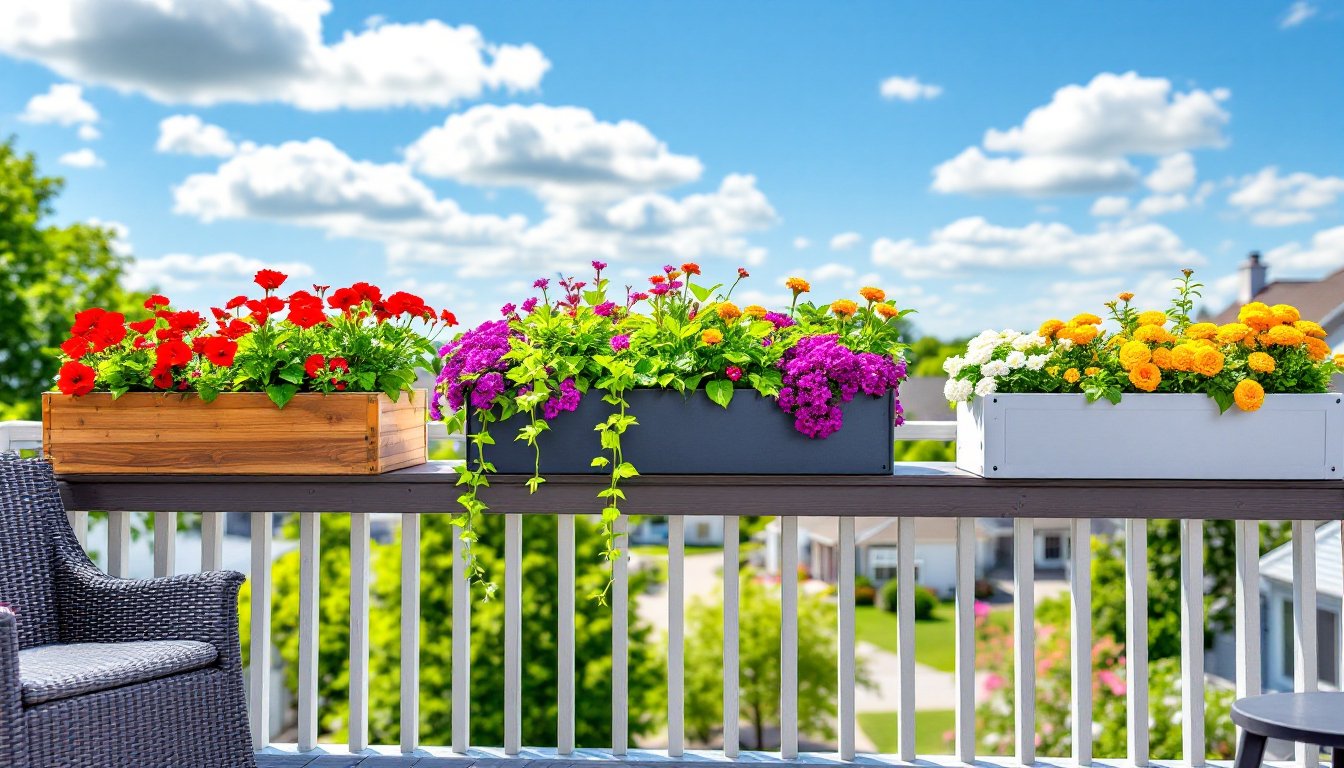
ToggleDeck railing planters turn overlooked vertical real estate into lush growing zones. They’re particularly useful when deck square footage is at a premium or when ground-level soil is poor or nonexistent. Instead of letting railings sit empty, homeowners can layer color, texture, and even edibles at eye level, making the deck feel larger and more inviting. This guide covers the best planter types, creative design strategies, plant selection, and installation practices to help DIYers add greenery without sacrificing usable deck space.
Key Takeaways
- Deck railing planters maximize limited outdoor space by utilizing vertical real estate while solving drainage and soil issues, making them ideal for small decks, balconies, and poor soil conditions.
- Over-the-rail and bracket-mounted planter types offer flexibility—saddle-style boxes fit standard railings, while bracket-mounted options work with cable or glass railings for diverse design applications.
- Matching plants to sun exposure and root depth is critical: pair shallow boxes (6–8 inches) with herbs and lettuce, and deeper boxes (10–12 inches) with vegetables, shrubs, and ornamental grasses.
- Railing planters require more frequent watering than ground beds due to increased air exposure—water daily in summer and use self-watering models or mulch to reduce maintenance demands.
- Color blocking, layering with thriller-filler-spiller arrangements, and seasonal rotations create visual impact while keeping deck railings fresh and intentional throughout the year.
- Regular maintenance including deadheading, bracket inspections, and proper winter storage ensures long-term performance and prevents structural issues with mounted planters.
Why Deck Railing Planters Are Perfect for Small Spaces
Vertical growing is a game-changer when square footage is tight. Railing planters sit above the deck surface, preserving floor space for furniture, grills, or foot traffic. That’s especially valuable on narrow balconies or second-story decks where every square foot counts.
They also solve drainage and soil issues. Homes with clay soil, rock ledge, or poor drainage can’t support in-ground beds easily. Railing planters bypass that problem entirely, fill them with quality potting mix and you’re set.
Accessibility is another advantage. Plants at waist or chest height are easier to water, deadhead, and harvest than ground-level beds. For anyone with mobility concerns or back pain, this ergonomic benefit is significant. Also, elevated planters improve air circulation around foliage, reducing fungal disease pressure compared to crowded ground beds.
Railing planters can also define zones on larger decks. A row of boxes along one rail creates a natural boundary between dining and lounging areas, adding privacy and softening hard edges without blocking sightlines entirely.
Best Types of Deck Railing Planters
Over-the-Rail Planters
Saddle-style planters hook over the top rail and hang on both sides, distributing weight evenly. Most models fit standard 2×4 or 2×6 top rails (actual dimensions 1½”×3½” or 1½”×5½”). Check the bracket width before buying, railings with decorative caps or wider composite profiles may require adjustable brackets.
Materials vary widely. Resin and molded plastic models are lightweight and affordable, typically under $20 each, but they can crack in freeze-thaw cycles. Metal planters (powder-coated steel or galvanized) offer better longevity and a sleeker profile, though they heat up in direct sun and may need liner inserts to protect roots. Wood boxes, usually cedar or redwood, blend naturally with traditional decks but require annual sealing to prevent rot.
Soil capacity matters. A 10-inch-deep saddle planter holds roughly 0.5 cubic feet of potting mix and can support small annuals or herbs. For deeper-rooted plants like tomatoes or peppers, look for boxes with at least 12 inches of depth. Most saddle planters include built-in drainage holes: if yours don’t, drill three to five ¼-inch holes in the bottom to prevent waterlogging.
Hanging and Bracket-Mounted Planters
Bracket-mounted boxes attach to the deck’s vertical balusters or posts rather than the top rail. This style works well on decks with cable or glass panel railings where over-the-rail models won’t fit. Heavy-duty L-brackets (rated for outdoor use) bolt through the baluster into a backing cleat or directly into the post. Use stainless steel or coated deck screws to avoid rust stains.
These planters can be heavier since they’re supported from below. A 24-inch window box filled with moist soil and plants can weigh 30 to 40 pounds, so confirm that balusters are structurally sound and spacing meets code (typically 4 inches maximum gap per IRC to prevent child entrapment). If balusters feel loose, reinforce them before hanging weight.
Hanging planters suspended from decorative brackets add a cottage-garden feel and work on posts or overhead beams. Ensure hooks or eye bolts are screwed into solid wood (not just siding or trim) and rated for the planter’s loaded weight. A 12-inch hanging basket with soil and trailing plants typically weighs 15 to 20 pounds when saturated.
Creative Design Ideas for Deck Railing Planters
Color blocking creates visual impact with minimal effort. Plant a series of boxes with a single flower color, scarlet geraniums, white petunias, or deep purple calibrachoa, for a cohesive, intentional look. This approach works especially well on longer railings where mixed plantings can feel chaotic.
For a layered effect, combine upright, mounding, and trailing plants in each box. Start with a thriller in the center (a tall spike or grass), add fillers around the base (bushy annuals), and finish with spillers that cascade over the edge (ivy, bacopa, or sweet potato vine). This three-tier formula delivers the lush, overflowing look seen in professional landscapes.
Edible railings turn decks into productive kitchen gardens. Planters filled with herbs, basil, parsley, cilantro, thyme, offer fresh seasoning steps from the grill. Compact vegetable varieties like ‘Tumbling Tom’ cherry tomatoes, ‘Spacemaster’ cucumbers, or rainbow Swiss chard thrive in 12-inch-deep boxes with full sun. Pair edibles with outdoor patio decor for a functional yet stylish space.
Seasonal rotations keep the display fresh. Spring pansies and snapdragons transition to summer zinnias and marigolds, then fall mums and ornamental kale. Swapping out plants three times a year maximizes curb appeal and matches the deck’s look to the season. For a more permanent solution, evergreen shrubs like boxwood or dwarf conifers provide year-round structure with less replanting.
Mixing materials adds texture. Combine sleek metal planters on modern composite railings with rustic wood boxes on traditional wood decks. Grouping different sizes and heights, 8-inch, 10-inch, and 12-inch boxes, along the same rail creates rhythm and prevents a flat, monotonous line.
Choosing the Right Plants for Railing Planters
Sun exposure is the first filter. South- and west-facing railings receive six-plus hours of direct sun and suit sun-loving annuals: petunias, geraniums, marigolds, zinnias, and salvia. North- and east-facing rails get partial to full shade: opt for impatiens, begonias, coleus, fuchsia, or ferns.
Root depth limits plant choice. Shallow boxes (6 to 8 inches) work for lettuce, herbs, and shallow-rooted flowers like alyssum or lobelia. Deeper boxes (10 to 12 inches) accommodate tomatoes, peppers, small shrubs, and ornamental grasses. Avoid plants with aggressive root systems (like bamboo or large perennials) that will quickly outgrow confined containers.
Wind tolerance is critical on upper-story decks or open sites. Railing planters catch more wind than ground beds, so choose sturdy, low-profile plants. Ornamental grasses like blue fescue or fiber optic grass flex without snapping. Succulents (sedum, hens-and-chicks) handle gusts and drought. Fragile plants with large leaves or brittle stems (hostas, dahlias) struggle in exposed locations.
Drought-tolerant species reduce watering frequency. Portulaca, lantana, verbena, and rosemary can handle occasional dry spells, which is helpful if you travel or forget to water. That said, railing planters dry out faster than ground beds due to air exposure on all sides, expect to water daily in summer heat, sometimes twice if boxes are small or in full sun.
Combining small patio plantings with railing boxes extends greenery throughout the deck. Match color schemes and plant varieties for a unified design.
Installation Tips and Maintenance Best Practices
Check railing capacity before hanging planters. Most residential deck railings are built to IRC standards, which require a 200-pound concentrated load on the top rail. A row of filled planters rarely approaches that limit, but if railings feel loose or wobbly, reinforce posts and balusters before adding weight. For covered patio setups, ensure overhead brackets are secured into joists or beams, not just fascia.
Use quality potting mix, not garden soil. Potting mix is lighter, drains better, and resists compaction. A typical formula includes peat moss or coir, perlite or vermiculite, and compost. Fill boxes to within 1 inch of the rim to allow space for water without overflow. Add a slow-release granular fertilizer (14-14-14 or similar) at planting, then supplement with liquid fertilizer every two weeks during active growth, containers leach nutrients faster than ground beds.
Install planters level and secure. Saddle-style boxes should rest evenly on the top rail without tipping. Some models include adjustable screws or clamps to lock them in place, use these to prevent wind from shifting boxes. Bracket-mounted planters need two to three screws per bracket, driven into solid wood (not just composite cladding). Pre-drill holes to avoid splitting.
Watering is the most common maintenance task. Railing planters dry out quickly, especially in sun and wind. A moisture meter (under $10) takes the guesswork out, water when the reading drops to the dry zone, typically every 24 to 48 hours in summer. Self-watering planters with built-in reservoirs extend the interval to three to five days, a worthwhile upgrade for frequent travelers. According to gardening resources, mulching the soil surface with ¼ to ½ inch of shredded bark slows evaporation and keeps roots cooler.
Deadhead spent flowers weekly to encourage reblooming. Pinch off faded blossoms just above the next set of leaves. For bushier growth, pinch back leggy stems by one-third mid-season. Rotate planters 90 degrees every two weeks if one side gets more sun, this promotes even growth and prevents lopsided plants.
Inspect brackets and hardware monthly. Rust, loose screws, or cracked plastic can lead to planter failure. Tighten fasteners and replace corroded parts immediately. At season’s end, empty soil, scrub boxes with a mild bleach solution (1 part bleach to 9 parts water) to kill pathogens, and store indoors if planters aren’t frost-proof. For those working on concrete patio projects, similar cleaning routines apply to keep surfaces stain-free.
Winterizing depends on climate. In zones with hard freezes, remove planters or empty them to prevent ice expansion from cracking containers. In milder regions, switch to cold-hardy plants like pansies, kale, or evergreens and reduce watering frequency. Frost-proof resin and metal planters can stay mounted year-round: wood boxes benefit from a fresh coat of exterior sealant each fall.
For additional design inspiration, home improvement sites offer seasonal planting guides and container combinations that complement railing planters beautifully.


