
Table of Contents
ToggleA bedroom without a feature wall is like a sandwich without the best ingredient, it’s functional, sure, but something’s missing. Feature walls anchor a room, create visual interest, and give you a chance to try bold design moves without committing an entire space to them. Whether the goal is adding depth to a boxy room, highlighting an architectural element, or just injecting some personality, a well-executed feature wall does the heavy lifting.
The good news? Feature walls aren’t limited to one technique. Paint, wood paneling, wallpaper, stone, fabric, each material brings its own texture, warmth, and character. Some projects take an afternoon and a roller: others require a miter saw, a level, and a decent playlist. This guide walks through the most effective bedroom feature wall ideas for 2026, from the straightforward to the ambitious.
Key Takeaways
- A well-executed bedroom feature wall creates a focal point and visual depth, making the space feel intentional and designed rather than simply decorated.
- Bedroom feature wall ideas range from budget-friendly paint and peel-and-stick wallpaper (under $100, weekend projects) to textured wood paneling, shiplap, and stone veneer for more ambitious upgrades.
- Feature walls typically work best behind the headboard as the natural anchor, though they can also highlight reading nooks, windows, or architectural elements like sloped ceilings.
- Consider room size and lighting when choosing materials: small bedrooms benefit from lighter tones and subtle textures, while larger spaces can handle bold colors, dark paint, and busy patterns.
- Prep work is critical for painted feature walls—fill holes, sand smooth, and always prime before painting to ensure even coverage and a polished finish.
- Match your bedroom feature wall material to your existing décor style (reclaimed wood for farmhouse, slat walls for mid-century, brick veneer for industrial) to ensure it feels like an intentional part of your room’s aesthetic.
What Is a Feature Wall and Why Does Your Bedroom Need One?
A feature wall (also called an accent wall) is a single wall treated differently from the others in a room, through color, texture, material, or pattern. It’s not a decorative afterthought. Done right, it defines the room’s focal point, balances proportions, and adds dimension without overwhelming the space.
In bedrooms, feature walls typically sit behind the headboard. That’s the natural anchor, the first thing noticed when entering and the backdrop for the bed, which is usually the room’s largest piece of furniture. But there’s no rule. A feature wall can highlight a reading nook, frame a window, or call attention to interesting architecture like a sloped ceiling or alcove.
Why bother? Because paint alone can feel flat, especially in smaller bedrooms or rooms with low ceilings. A feature wall introduces contrast and breaks up visual monotony. It also lets homeowners test bolder choices, a deep charcoal, a geometric wallpaper, reclaimed wood, without the commitment (or cost) of treating all four walls. And unlike furniture, which can be moved or replaced on a whim, a feature wall feels intentional. It’s the kind of upgrade that makes a bedroom look designed, not decorated.
Paint and Color Feature Wall Ideas
Paint is the most accessible feature wall option, low cost, fast turnaround, and fully reversible. But slapping on a darker shade isn’t enough to make it work. The key is contrast and intention.
Dark and moody colors remain popular in 2026. Deep navy, charcoal, forest green, and even black create drama and make a room feel cocooned, which works well in bedrooms where relaxation is the goal. These shades recede visually, so they can actually make a small bedroom feel larger if the other three walls stay light. One gallon of paint typically covers 350–400 square feet with one coat, so most bedroom feature walls need a gallon or less, assuming two coats.
Warm neutrals like terracotta, clay, and dusty blush bring warmth without the intensity of saturated color. They pair well with natural wood furniture and linen bedding, and they don’t fight with changing light throughout the day.
Color blocking takes more effort but delivers a bold, graphic look. This involves taping off geometric shapes, horizontal bands, vertical panels, or interlocking rectangles, and painting each section a different color. Use painter’s tape rated for delicate surfaces (the blue or green stuff, not masking tape) and a small roller or brush for crisp edges. Remove tape while the paint is still slightly tacky to avoid peeling.
Ombré or gradient walls create a softer transition from one hue to another, usually light to dark from ceiling to baseboard. This technique requires blending wet paint with a large brush or sponge, working in horizontal bands. It’s not beginner-friendly, but it’s doable with patience and the right lighting to check blending as you go.
Prep is everything. Fill nail holes with spackling paste, sand smooth, and prime if painting over a dark color or fresh drywall. Skipping primer is the fastest way to uneven coverage and wasted paint.
Textured and Material-Based Feature Walls
Texture adds a tactile element paint can’t match. These feature walls feel layered and substantial, and they often improve acoustics by softening sound reflection.
Board-and-batten involves vertical boards (battens) applied over a flat surface in evenly spaced intervals, creating a paneled look. It’s classic, adaptable, and relatively simple. Use 1×2 or 1×3 pine boards (actual dimensions: 3/4″ x 1.5″ or 3/4″ x 2.5″) and attach them to studs with a finish nailer or construction adhesive. Space them 12–16 inches apart, or adjust based on the wall width to keep spacing even. Paint everything the same color for a subtle, monochromatic look, or paint the recessed sections a contrasting shade.
Shiplap remains a go-to for farmhouse and coastal styles. Real shiplap has a rabbet joint that allows boards to overlap slightly, but many DIYers use nickel-gap pine planks or even 1×6 common boards with small spacers between them (a nickel works, hence the name). Run planks horizontally and nail into studs. If the wall isn’t perfectly flat, use shims behind boards to avoid wavy lines. Finish with satin or semi-gloss paint, it’s easier to clean than flat.
3D wall panels are prefabricated tiles made from MDF, PVC, or plant fiber that create geometric relief patterns, waves, hexagons, chevrons. They install with adhesive and can be painted any color. Panels typically come in 2×2-foot squares, making layout simple. They’re lightweight and forgiving, so no advanced carpentry skills required. Just make sure the wall is clean and dry before sticking them up.
Stone or brick veneer brings serious texture and a bit of weight. Thin stone veneer panels (usually 1–2 inches thick) can be installed over drywall with mortar or panel adhesive, depending on the product. Brick veneer strips or faux brick panels offer a similar look with less hassle. These materials work especially well in modern industrial or rustic bedrooms. Be aware: real stone is heavy. Check manufacturer weight specs and wall load capacity, especially on upper floors.
Wood and Paneling Feature Wall Designs
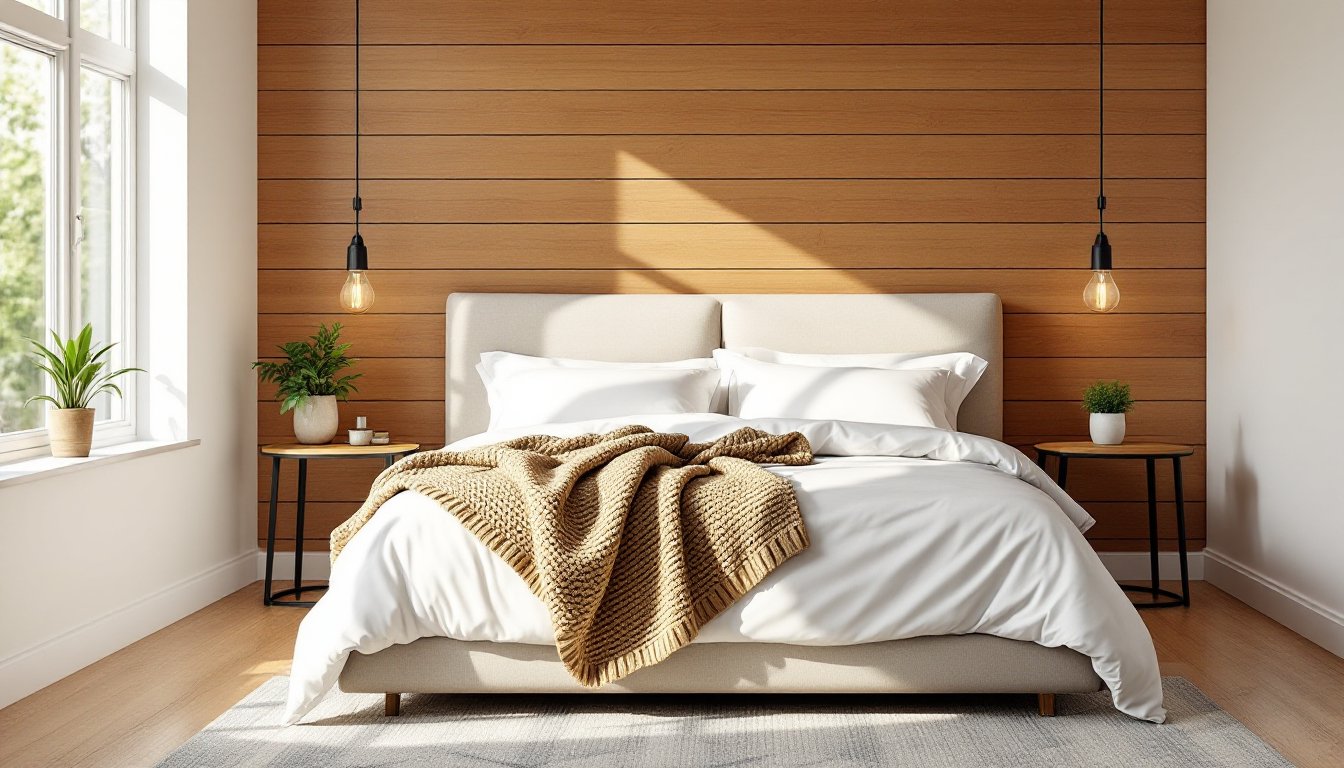
Wood paneling delivers warmth and character, and it’s one of the most versatile feature wall treatments. The look changes entirely based on wood type, orientation, and finish.
Reclaimed wood adds instant patina. Barn wood, pallet wood, or salvaged planks bring texture, color variation, and a story. Widths and lengths vary, so layout becomes part of the design. Most budget home renovation projects prioritize character over perfection, which works in wood’s favor, knots, nail holes, and color shifts are features, not flaws. Attach boards with finish nails into studs or furring strips. Seal with polyurethane or Danish oil to prevent splinters and preserve the wood.
Tongue-and-groove pine or cedar creates a tight, seamless surface. Boards lock together along the edges, so there are no visible gaps. They’re typically sold in 1×4 or 1×6 nominal sizes and can run vertically, horizontally, or even diagonally for a dynamic look. Use a finish nailer and shoot nails at an angle through the tongue (blind nailing) so fasteners are hidden. This method takes longer but delivers a cleaner result.
Plywood accent walls are budget-friendly and surprisingly stylish. Use 3/4-inch cabinet-grade plywood with an attractive veneer (birch, oak, walnut) and apply it as full sheets or cut into planks. The grain does the work, just seal with a clear topcoat. For a modern twist, paint the plywood and add a stain or gel stain to the grain lines for contrast.
Slat walls (vertical or horizontal wood slats with gaps between) are trending in 2026. They create rhythm and shadow play as light shifts. Build them with 1×2 furring strips spaced evenly (2–4 inches apart) over a backing board or directly to studs. Stain or paint slats before installation to avoid touch-ups in tight spaces.
Wallpaper Feature Walls for Every Style
Wallpaper is experiencing a serious comeback, and the quality gap between peel-and-stick and traditional paste-up options has narrowed. For renters or commitment-phobes, removable wallpaper is a no-brainer. For permanence and pattern precision, traditional wallpaper still wins.
Peel-and-stick wallpaper installs without paste or water. Most types are repositionable for the first few minutes, which helps with alignment. It adheres best to smooth, primed walls, textured surfaces or flat paint can reduce stickiness. Measure carefully and cut panels with a utility knife and straight edge. Overlap seams slightly, then trim the excess with a sharp blade for tight joints. Many design shows highlight peel-and-stick options for quick room refreshes, and the range of patterns available in 2026 is vast, from bold florals to subtle linens.
Traditional wallpaper requires paste (premixed or powder), a smoothing tool, and patience. It’s more work upfront but tends to last longer and handle moisture better, which matters in climates with high humidity. Use a plumb line or laser level to ensure the first panel is perfectly vertical, everything else follows that line. Trim panels at the ceiling and baseboard with a sharp blade, and wipe off excess paste immediately with a damp sponge.
Textured wallpaper, grasscloth, linen weave, or embossed patterns, adds depth similar to paneling but with less structural commitment. Grasscloth is natural fiber and shows seams intentionally: it’s part of the aesthetic. Linen-look vinyl is more forgiving and wipeable, making it practical for homes with kids or pets.
Bold patterns and murals turn a feature wall into art. Large-scale florals, geometric prints, or photographic murals create instant impact. Match patterns carefully at seams, especially with repeating designs. Most manufacturers list the repeat distance (vertical distance before the pattern repeats), which dictates how much extra wallpaper to order. Budget for 10–15% waste due to pattern matching and trimming.
Creative DIY Feature Wall Projects
Not every feature wall fits neatly into paint, wood, or wallpaper. These ideas push a little further and reward those willing to get hands-on.
Fabric walls involve stretching fabric panels across a wall using liquid starch or a staple gun and furring strips. It’s semi-permanent, sound-dampening, and a clever way to use interesting textiles, vintage quilts, tapestries, or bold prints. Starch allows fabric to be removed later without damaging the wall, making it renter-friendly. Stapling over furring strips works better for thicker fabrics and gives a cleaner, taut finish.
Gallery walls aren’t technically a single material, but a curated arrangement of frames, mirrors, shelves, and art creates a feature wall through composition. Use a paper template to plan layout on the floor first, then transfer measurements to the wall. Anchor heavier frames into studs or use toggle bolts in drywall. Keep spacing consistent, 1.5 to 3 inches between frames, for a cohesive look.
Cork or acoustic panels bring function and style. Cork tiles or fabric-wrapped acoustic panels reduce echo and can be arranged in patterns. Use adhesive strips or mounting hardware depending on weight. These work especially well in bedroom makeovers where reducing noise is a priority.
Rope or macramé walls add bohemian texture. Mount a horizontal rod or dowel near the ceiling and hang lengths of thick rope or macramé panels. It’s lightweight, removable, and softens hard surfaces. No tools beyond a drill for mounting brackets.
Painted murals are the ultimate custom option. Sketch the design lightly in pencil, then fill in with acrylic paint or wall paint tinted to custom colors. Use a small angled brush for details and a roller for large areas. Seal finished murals with matte varnish to protect against scuffs. This approach demands artistic confidence, but stencils or projectors can guide less experienced painters.
How to Choose the Right Feature Wall for Your Bedroom
Picking the right feature wall comes down to three factors: room size, style consistency, and skill level.
Room size and light dictate color and texture choices. Small bedrooms benefit from lighter feature walls with subtle texture, board-and-batten in white, soft-toned wallpaper, or warm neutrals. Dark colors can work if the other three walls stay bright and natural light is abundant. Large bedrooms handle bold moves better, deep paint, thick wood paneling, or busy patterns won’t overwhelm the space.
Existing style and furniture should inform material choice. A mid-century bedroom pairs well with walnut slat walls or geometric wallpaper. Farmhouse styles lean toward shiplap or reclaimed wood. Industrial spaces benefit from brick veneer or painted concrete-look panels. The feature wall should feel like an intentional extension of the room’s aesthetic, not a random insert.
Skill level and tools matter more than ambition. Paint projects require basic tools, roller, brush, tape, and are forgiving. Wallpaper needs precision but not power tools. Wood paneling, board-and-batten, and slat walls require a miter saw, level, stud finder, and finish nailer. If those aren’t in the garage already, factor in tool cost or rental. Some projects, like stone veneer or heavy wood installations on upper floors, may require load calculations or permits, especially if modifying framing. When in doubt, consult local building codes or a contractor.
Budget and timeline also shape decisions. Paint and peel-and-stick wallpaper can be done in a weekend for under $100. Reclaimed wood or custom murals might stretch into the low four figures and take multiple weekends. Be realistic about both.
Finally, consider how the feature wall integrates with decorating other spaces, it shouldn’t feel isolated. A bedroom feature wall that echoes materials or colors used elsewhere in the home creates continuity and elevates the entire space.


