
Table of Contents
ToggleBohemian style doesn’t mean throwing random pillows on a bed and calling it eclectic. A truly cozy boho bedroom blends intentional layering, natural textures, and warmth with just enough vintage character to feel lived-in, not staged. Whether you’re reworking a primary bedroom or transforming a spare room, the approach requires more than Pinterest boards. It takes deliberate choices in materials, lighting, and scale to hit that relaxed-but-curated mark. The good news? Most of these updates are straightforward DIY projects that don’t require a contractor or a design degree.
Key Takeaways
- Cozy boho bedroom ideas rely on intentional layering of natural textures like linen, wool, and jute combined with warm, muted earth tones like terracotta, sage, and charcoal to create a lived-in atmosphere.
- Layer rugs, throws, and pillows in varied textures and sizes to build visual interest—use a large neutral base rug with a patterned vintage rug on top, then pile the bed with mixed fabric weights in coordinated warm tones.
- Replace harsh overhead lighting with warm-toned ambient fixtures (2700K–3000K bulbs) from multiple sources including rattan pendant lights, table lamps with natural fiber shades, and candlelight to achieve the cozy boho glow.
- Incorporate natural materials like rattan headboards, woven wall hangings, and greenery—real plants like pothos or snake plants, or high-quality faux greenery—to anchor the design with organic texture and warmth.
- Mix vintage finds from thrift stores and estate sales with handmade or artisan pieces to create visual rhythm and authenticity, avoiding matchy-matchy decor in favor of a collected-over-time aesthetic.
- Most boho bedroom updates are DIY-friendly projects like installing dimmers (15 minutes), building a cane headboard panel, or creating macramé wall hangings that don’t require professional help.
What Makes a Bedroom Feel Cozy and Boho?
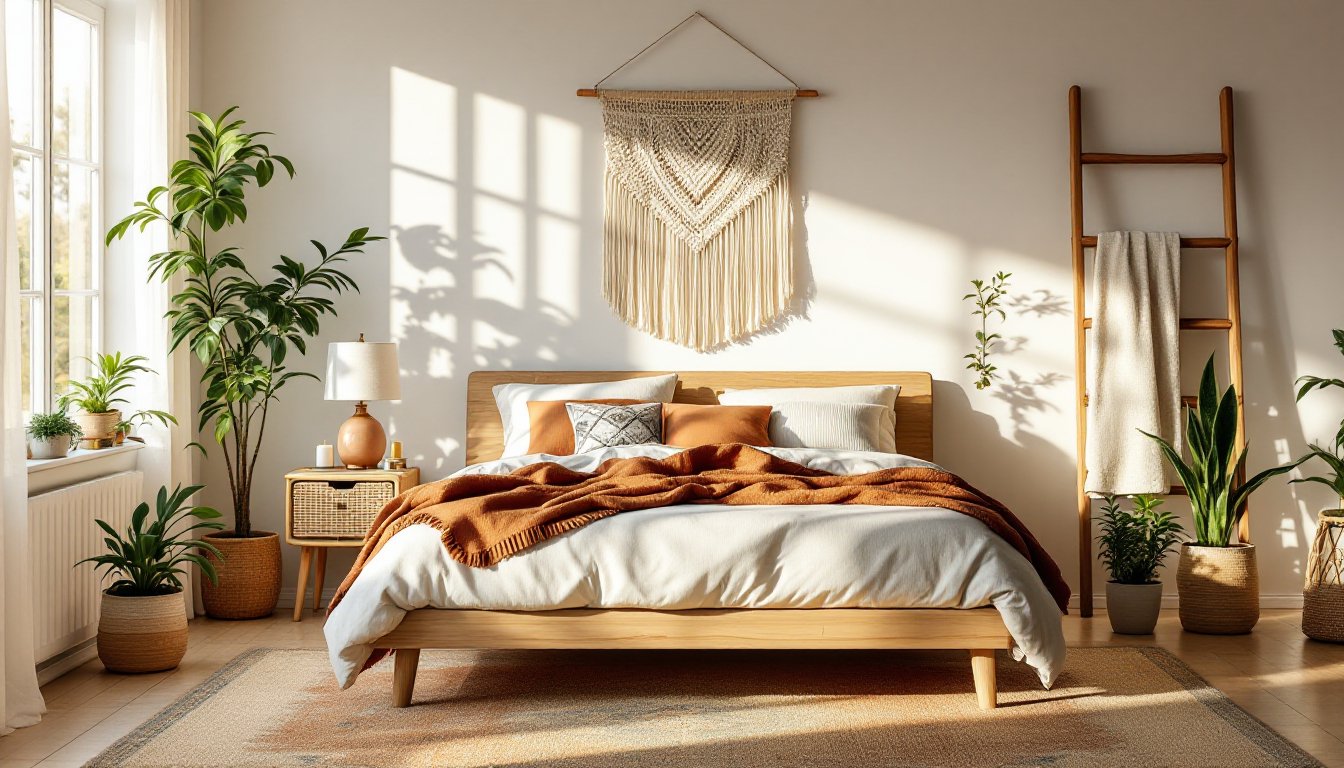
Boho style is rooted in eclecticism, but cozy boho hinges on tactile warmth and visual softness. Think woven textiles, layered bedding, and materials that invite touch, linen, wool, cotton, jute. The palette leans warm and muted: terracotta, rust, sand, sage, charcoal, and cream. Furniture tends toward low-profile pieces with natural wood grain or distressed finishes.
Unlike minimalist or modern styles, boho tolerates, even celebrates, a bit of visual weight. That means multiple rugs, hanging plants, stacked books, and wall hangings can coexist without feeling cluttered, as long as there’s a loose color thread tying it together. It’s organized chaos with intention.
Key elements include natural fiber textiles (macramé, woven wall hangings, jute rugs), soft ambient lighting (no harsh overhead fixtures), and greenery (real or high-quality faux). Boho is forgiving of imperfection, but cozy boho still requires editing. Too many patterns without a unifying palette, and the room tips into visual noise instead of relaxation.
Layer Textures with Rugs, Throws, and Pillows
Layering is the foundational technique in boho design, and it starts underfoot. Place a natural fiber rug, jute, sisal, or seagrass, as the base layer, then add a smaller vintage or patterned rug on top. The base rug should extend at least 18–24 inches beyond the bed on each side for visual balance. The top layer can be a Persian-style wool rug, a flatweave kilim, or even a sheepskin for contrast.
On the bed, skip the matchy-matchy duvet sets. Start with neutral linen or cotton bedding in cream, oatmeal, or soft gray, then pile on throws and pillows in varied textures. A chunky knit throw, a lightweight cotton waffle weave, and a woven cotton blanket in warm tones all work. Mix pillow sizes: Euro shams (26″ × 26″), standard shams, and a few lumbar pillows (12″ × 20″ or 14″ × 36″) in the front.
Fabric choices matter. Linen wrinkles beautifully and softens over time. Cotton gauze has a lived-in drape. Velvet adds richness without being formal if you stick to muted rust or olive tones. Avoid synthetics, they don’t age well and feel flat compared to natural fibers. Interior design experts at MyDomaine consistently highlight how tactile variety transforms flat spaces into inviting retreats.
Don’t overlook the walls. A macramé wall hanging or woven tapestry above the headboard adds vertical texture. If you’re handy with knots, DIY macramé projects use 3mm–5mm cotton cord and a dowel rod. Pre-made options work fine too, just avoid anything too small or centered awkwardly. Scale it to at least two-thirds the width of your bed for proper proportion.
Choose a Warm, Earthy Color Palette
Boho bedrooms thrive on warm neutrals and muted earth tones. Think terracotta, burnt sienna, clay, mustard, sage green, dusty rose, and charcoal. These colors mimic natural landscapes, desert sand, forest floors, canyon walls, and create a grounded, calming atmosphere.
Start with walls. If you’re painting, consider warm whites with yellow or pink undertones (not stark or cool whites). Benjamin Moore’s “White Dove” or Sherwin-Williams’ “Alabaster” are solid baseline choices. For accent walls, terracotta or a muted rust tone adds instant warmth without overwhelming smaller bedrooms. Use low-VOC or zero-VOC paint for better indoor air quality, most major brands offer them now at comparable prices.
When selecting bedding and textiles, stick to 2–3 core colors plus neutrals. For example: cream base + terracotta + olive green, or oatmeal + rust + charcoal. This keeps the layering cohesive even when mixing patterns. Patterns themselves should be organic, geometric prints, tribal motifs, or botanical designs, not bold graphics or high-contrast stripes.
Wood tones also play into the palette. Look for furniture in natural oak, walnut, or teak with visible grain. Avoid overly glossy finishes or painted pieces unless they’re distressed or vintage. Rattan and cane furniture fit seamlessly and are often more affordable than solid wood options.
Incorporate Natural Materials and Greenery
Natural materials are non-negotiable in boho design. Wood, rattan, wicker, jute, linen, and clay all bring organic texture and visual warmth. A rattan headboard, woven pendant light, or jute storage basket instantly signals boho without needing explanation.
For headboards, consider a DIY rattan or cane panel mounted to the wall. Pre-made cane webbing sheets (available in 18″ × 24″ or larger panels) can be cut to size and attached to a 1×3 or 1×4 pine frame with wood glue and staples. Finish edges with wood trim or leave raw for a relaxed look. If you’re not building from scratch, thrift stores and estate sales often have vintage rattan or bamboo furniture that needs minimal refinishing.
Greenery adds life and improves air quality. Pothos, snake plants, and philodendrons tolerate low light and infrequent watering, ideal for bedrooms. Hang them in macramé plant hangers, place them on floating shelves, or cluster several small pots on a wooden stool or plant stand. Ceramic or terracotta pots in neutral or earth tones keep the aesthetic cohesive.
If live plants aren’t feasible, high-quality faux greenery works, just avoid the shiny, obviously plastic varieties. Look for stems with realistic leaf texture and matte finishes. Pampas grass, eucalyptus, and dried florals in a simple ceramic vase are low-maintenance alternatives that still deliver natural texture.
Many homeowners tackling bedroom makeovers prioritize integrating natural elements early in the process, as they anchor the rest of the design choices.
Add Ambient Lighting for a Relaxing Glow
Harsh overhead lighting kills the cozy vibe instantly. Boho bedrooms rely on layered, warm-toned ambient lighting from multiple sources at varying heights. Aim for 2700K–3000K bulbs (soft white to warm white) across all fixtures.
Start by replacing builder-grade ceiling fixtures with a rattan or woven pendant light. These diffuse light softly and add sculptural interest. If you’re renting or can’t swap fixtures, add a plug-in pendant kit with a decorative cord and hang it from a ceiling hook (use a toggle bolt in drywall for support). Most kits handle up to 40-watt equivalent LED bulbs.
Table lamps and floor lamps should have fabric or natural fiber shades, linen, cotton, or rattan, not glossy metal. Place one on each nightstand and consider a corner floor lamp with a tripod wood base for additional fill light. String lights or fairy lights add soft accent lighting, but use them sparingly. A single strand draped along a headboard or woven through a macramé wall hanging is enough, more starts to feel collegiate.
Candles (real or LED) in ceramic or brass holders add another layer of warmth. For actual candles, use unscented or lightly scented soy or beeswax to avoid competing smells. Group them in odd numbers on a wooden tray or shelf.
Dimmers are worth installing if you own the space. A basic single-pole dimmer switch (about $15–25) takes 15 minutes to install and works with most LED bulbs labeled “dimmable.” Always turn off the breaker before swapping any electrical components. If you’re uncomfortable with electrical work, hire a licensed electrician, this is a quick job and shouldn’t cost more than $75–100 in most markets.
For design inspiration focused on small bedrooms, small space decorations often emphasize strategic lighting to visually expand tight quarters.
Mix Vintage and Handmade Decor Pieces
Boho thrives on the tension between vintage finds and handmade touches. This isn’t about buying everything new from a big-box store, it’s about curating pieces with history or craft.
Start hunting thrift stores, estate sales, and online marketplaces for vintage wood furniture, woven baskets, ceramic vases, and brass accents. A mid-century nightstand, a weathered wooden ladder (great for hanging throws), or a set of mismatched ceramic planters all add character. Don’t worry about minor dings or patina, that’s the point. Sand and refinish if something’s truly rough, but a little wear reads as authenticity.
Handmade items bring soul into the space. Support local makers or try your hand at DIY. A macramé wall hanging, hand-dyed pillow covers, or painted terracotta pots all qualify. If you’re not crafty, platforms like Etsy or local craft markets offer handmade goods that feel personal without the DIY learning curve.
Mix scales and heights. A tall floor mirror with a carved wood frame, a low woven basket for extra blankets, and a small ceramic dish for jewelry create visual rhythm. Avoid matchy-matchy sets, boho style is about collected-over-time, not bought-all-at-once.
Art and wall decor should feel personal. Frame vintage botanical prints, hang a woven wall basket collection, or display a large piece of driftwood or a macramé hanging. For a gallery wall, mix frames in different finishes, natural wood, black, brass, but keep mats neutral (white or cream) for cohesion.
Numerous design resources, including Apartment Therapy, showcase how blending vintage and handmade elements creates layered, lived-in spaces. Similarly, boho-chic bedroom inspirations frequently highlight the importance of curated vintage pieces over mass-produced decor.
Conclusion
Creating a cozy boho bedroom isn’t about following a rigid formula, it’s about layering textures, choosing warm tones, and mixing natural materials with vintage character. Focus on tactile fabrics, ambient lighting, and greenery to build a space that feels genuinely lived-in. Most of these updates are approachable DIY projects that don’t require permits or professional help, just intentional choices and a willingness to curate over time.


