
Table of Contents
ToggleCorner cabinets are where kitchen storage goes to die, cans shoved in the back, expired spices forgotten for years, and enough wasted space to hold your sanity. But with the right setup, those awkward 90-degree angles become the hardest-working square footage in your kitchen. Modern corner pantry cabinets solve the accessibility problem through smart hardware, clever layouts, and strategic organization. Whether you’re retrofitting existing cabinetry or planning a full kitchen remodel, understanding your corner pantry options turns dead space into a functional storage powerhouse. This guide walks through proven designs, installation considerations, and organization strategies that actually work in real kitchens.
Key Takeaways
- Corner pantry cabinet ideas maximize wasted kitchen space by utilizing specialized hardware like Lazy Susans and pull-out shelves that bring items within reach and prevent expired goods from accumulating in dark corners.
- Lazy Susan systems with ball-bearing hardware and pull-out shelving solutions can recover up to 40% of previously inaccessible storage, making them ideal for canned goods and small appliances with proper weight distribution.
- Diagonal corner pantry cabinets eliminate blind corner waste by featuring a 45-degree angled front, offering simple installation without complex hardware while requiring more floor space than traditional 90-degree designs.
- Custom corner pantry solutions, including walk-in pantries and floor-to-ceiling towers, work well in older homes and open-plan layouts but require proper wall stud anchoring and local code compliance before installation.
- Effective corner pantry organization depends on tiered shelf risers, LED strip lighting, labeled zones, and FIFO stock rotation—paired with weight-limit awareness and measurement discipline—to keep the space functional long-term.
Why Corner Pantry Cabinets Are Game-Changers for Kitchen Storage
Standard corner cabinets waste up to 40% of their interior volume due to poor accessibility. Items get lost in the back, and homeowners end up buying duplicates of what they already own but can’t find.
Corner pantry cabinets address this with specialized hardware and layout designs that bring contents forward or rotate them into reach. These solutions don’t just add storage, they make existing space usable.
Key benefits include:
- Full-depth access to items stored 24+ inches back
- Reduced bending and reaching compared to base cabinets
- Integration with standard cabinet runs (no custom widths required)
- ROI on kitchen remodels, buyers notice functional storage
Most corner pantry solutions fit within base or tall cabinet footprints, using dimensions like 33×33 inches (base) or 24x24x84 inches (tall). They work in L-shaped and U-shaped kitchen layouts where two cabinet runs meet at 90 degrees.
One caution: corner pantries require adequate clearance for door swings, pull-outs, or rotating shelves. Measure walkways and adjacent appliances before committing to a design. A 36-inch aisle is minimum: 42 inches is better if multiple people cook together.
Lazy Susan Corner Pantry Systems
The Lazy Susan (rotating shelf mechanism) is the classic corner solution, and modern versions are far better than the wobbly wire racks from the ’80s. Today’s systems use ball-bearing hardware rated for 100+ pounds per shelf and polymer trays that won’t chip or rust.
Typical configurations include:
- Full-round Lazy Susans: Circular shelves, 28–32 inches diameter, mounted on a center pole. Best for true 90-degree corner cabinets with bi-fold or accordion doors.
- Kidney-shaped (D-shape) Lazy Susans: Shelves cut to clear door frames and hinges. These attach to the cabinet door, rotating as you open it, no reaching required.
- Three-quarter-round models: Fit diagonal corner cabinets (more on those below).
Installation notes: Most Lazy Susans mount to a bottom shelf and ceiling panel with a central pole. Pre-drill pilot holes to avoid splitting cabinet-grade plywood. Use a 4-foot level to ensure the pole is plumb before tightening, an off-kilter pole causes binding and uneven rotation.
Lazy Susans excel at storing canned goods, boxed meals, and small appliances. They’re less ideal for tall bottles (which tip during rotation) or loose items like onions (which roll off). Many homeowners installing custom pantry solutions pair Lazy Susans with fixed shelves above for taller items.
Cost range: $80–$300 for aftermarket kits, depending on diameter and weight capacity. Professional installation adds $100–$200 if you’re not comfortable with basic carpentry.
Pull-Out Shelving and Sliding Drawer Solutions
Pull-out shelving brings the back of the cabinet to you, no more crawling on hands and knees to find that jar of capers. These systems use drawer slides (either side-mount or undermount) rated for 75–100 pounds per shelf.
Two main styles:
- Blind corner pull-outs: These attach to the cabinet door. When you open the door, the first shelf swings out, then a second set of shelves slides forward from the blind corner. Think of it as a two-stage reveal. Brands like Rev-A-Shelf make models that fit 36- and 39-inch blind corner base cabinets.
- Magic corner systems: European-style hardware with wire or solid shelves that fold and extend. Opening the door triggers a linkage that pulls contents out and to the side. Slick engineering, but pricier, expect $300–$600 per unit.
Installation considerations: Pull-out systems require precise measurements. The cabinet opening width, depth, and any obstructions (like plumbing or electrical) all matter. Most kits include templates, but double-check that your cabinet interior is square, old houses often have racked frames that cause binding.
Use undermount slides (like Blum Tandem or Accuride 3832) for a cleaner look and better weight capacity. Side-mount slides work and cost less but eat up 1/2 inch of interior width per side.
Pull-outs suit heavy items like small appliances, cast iron, and bulk pantry goods. They’re not great for very tall items (which tip forward) or liquids in open containers. For kitchens inspired by professional organization tactics, pairing pull-outs with adjustable dividers keeps contents stable during extension.
Diagonal Corner Pantry Cabinet Designs
A diagonal corner cabinet (sometimes called a corner sink base when used with plumbing) has a 45-degree angled front instead of a door meeting at 90 degrees. The door faces the room at an angle, and the interior is a single, accessible chamber.
Dimensions and layout: Standard diagonal pantries are 36 or 42 inches wide (measured across the angled front). Inside depth ranges from 24 to 30 inches, all easily reachable. Because there’s no blind corner, you can use standard fixed shelves, pull-out shelves, or even roll-out carts.
Advantages:
- No wasted blind corner space
- Simple shelf installation (no special hardware)
- One wide door for visibility and access
- Works with standard hinges and door styles
Drawbacks:
- Takes up more floor space than a true corner cabinet
- The angled front doesn’t align with straight cabinet runs, visual preference varies
- Fewer manufacturers stock diagonal pantries in all door styles, so custom or semi-custom cabinetry may be required
Installation tip: Diagonal cabinets often anchor to adjacent cabinets with screws through the side panels (typically 1-1/4-inch cabinet screws into the stiles). Use a clamp to hold the cabinets flush before drilling. Check that both cabinets are level and plumb, shimming at the floor is normal, especially on older subfloors.
This design works particularly well in kitchens where the corner sits at the end of a run, or when maximizing corner storage without complex hardware is a priority. Pair with adjustable wire or wood shelving and you’ve got a versatile pantry that adapts as needs change.
Custom Corner Pantry Ideas for Unique Kitchen Layouts
Not every kitchen fits the standard cabinet catalog. Older homes, galley kitchens, and open-plan layouts often call for custom or semi-custom solutions.
Walk-in corner pantries: If you have 4×4 feet or more of corner floor space (common in L-shaped kitchens with a peninsula), consider framing a walk-in pantry. Use 2×4 framing, mount adjustable shelving on three walls, and install a standard pre-hung door. This is light carpentry, most DIYers with basic framing experience can handle it over a weekend. Just confirm the space isn’t load-bearing and check local code for any room dimension or ventilation requirements.
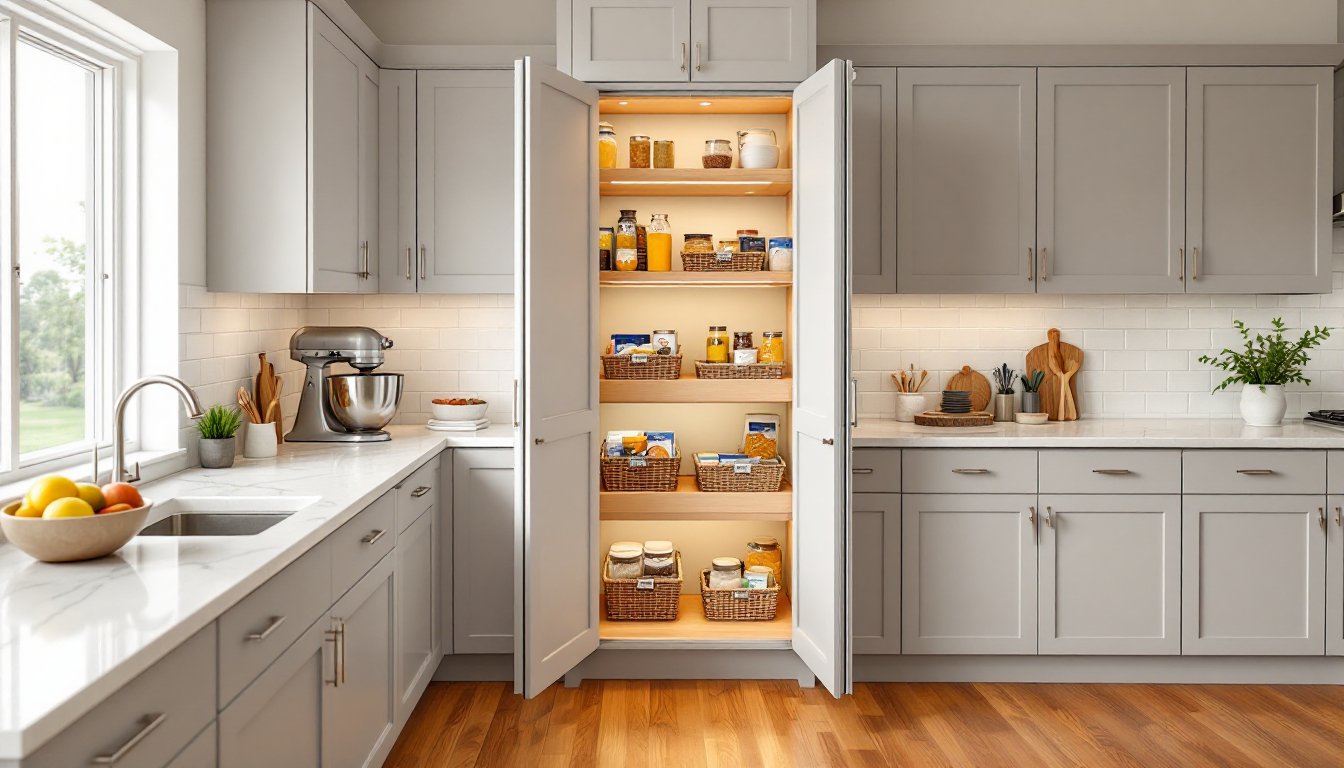
Floor-to-ceiling corner towers: Tall pantry cabinets (84 or 96 inches high) maximize vertical space. Add pull-out shelves at lower levels for accessibility and fixed shelves up top for rarely used items. Secure tall cabinets to wall studs with 3-inch cabinet screws to prevent tipping, especially important in seismic zones.
Open corner shelving: Not technically a cabinet, but open shelves (wood, metal, or wire) give visual access and work well in small kitchens where closed cabinets feel heavy. Use 1×12 or 1×10 pine or poplar boards for a DIY build, supported by metal L-brackets rated for the expected load. Seal with polyurethane or paint to resist moisture and staining.
Retrofit inserts: If you’re working with existing cabinets and don’t want to replace them, aftermarket organizers from Rev-A-Shelf, Hafele, or Knape & Vogt can retrofit into most standard openings. Measure three times: cabinet width at the opening, interior width between sides, and depth from the door to the back wall.
Permit and code notes: Walk-in pantries usually don’t require permits unless you’re moving plumbing or electrical. Always check local building codes. Custom cabinetry installation is cosmetic work in most jurisdictions, but if you’re altering structure (removing walls, adding doors), consult a licensed contractor.
Organization Tips to Maximize Your Corner Pantry Cabinet
Even the best hardware fails without a solid organization plan. Here’s how to keep your corner pantry functional long-term.
Use tiered shelf risers for canned goods and jars. These acrylic or wire risers (typically 3–6 inches tall) let you see labels without unstacking. Place taller items at the back, shorter at the front.
Install LED strip lighting inside cabinets. Corners are dark, and overhead kitchen lights don’t reach. 12V LED tape lights with motion sensors or door-switch activation run about $20–$40 and install with adhesive backing. Hardwire them to a nearby outlet or use battery-powered versions (replace batteries annually).
Label zones, not just containers. Assign each shelf or section a category, baking, breakfast, snacks, canned goods. This system prevents the “junk shelf” from forming where random items accumulate.
Rotate stock regularly. Use the FIFO method (first in, first out). When restocking, move older items forward. This is easier with pull-out shelves than fixed ones.
Don’t overload. Cabinet hardware has weight limits. A standard Lazy Susan shelf is rated for 75–100 pounds: exceeding that stresses bearings and causes premature failure. Distribute heavy items (canned goods, small appliances) across multiple shelves.
Measure containers before you buy. Bins, baskets, and turntables should fit your cabinet dimensions with 1/2 inch clearance for easy removal. Bring a tape measure to the store or verify product dimensions online.
Keep a small step stool nearby if your pantry extends above shoulder height. A sturdy two-step stool with a 300-pound rating is safer than standing on chairs. Store it in a nearby closet or mount a fold-down version if space is tight.
These habits work in any pantry, but they’re critical in corners where poor organization quickly makes storage unusable.
Conclusion
Corner pantry cabinets turn wasted kitchen real estate into high-capacity, accessible storage. Whether you choose a Lazy Susan, pull-out shelves, diagonal design, or custom build, the right system depends on your cabinet dimensions, budget, and how you cook. Measure carefully, match hardware to load requirements, and commit to an organization plan. With proper setup and maintenance, a corner pantry stops being a black hole and starts being one of the most efficient parts of the kitchen.


