
Table of Contents
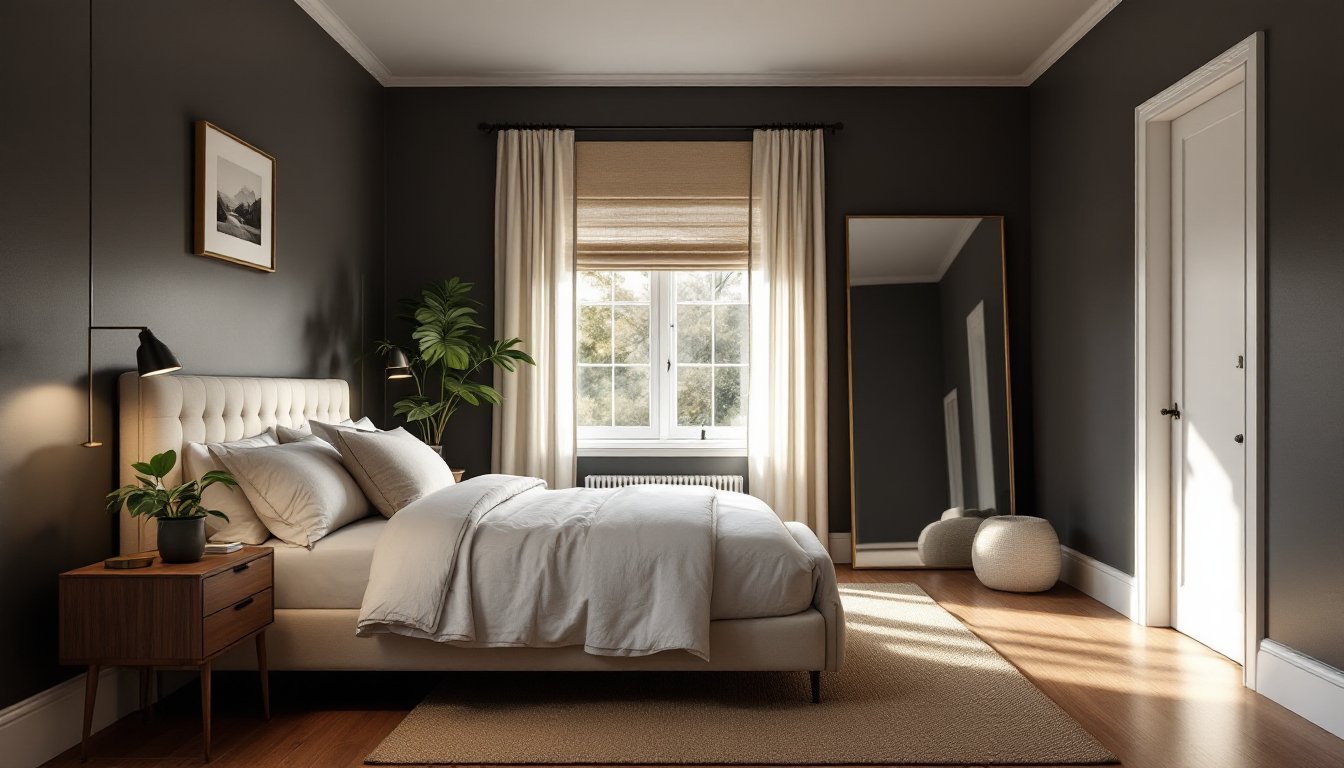
ToggleDark master bedrooms have moved beyond moody trend territory into timeless sophistication. While many homeowners default to safe neutrals and whites, embracing charcoal, navy, forest green, or even black creates a cocoon-like sanctuary that feels both intimate and elevated. The key isn’t just slapping dark paint on walls, it’s understanding how light, texture, and balance work together. Done right, a dark bedroom doesn’t shrink the space or feel oppressive. Instead, it amplifies luxury, hides visual clutter, and makes high-quality materials stand out. This guide walks through the practical decisions that make dark bedrooms work.
Key Takeaways
- Dark master bedroom ideas work beautifully when you understand how light, texture, and balance interact—dark walls absorb light to create a softer, more restful environment than bright whites.
- Choose dark colors strategically: charcoal and navy offer versatility, forest green pairs well with brass, and undertones matter significantly since blue undertones feel modern while warm undertones create coziness.
- Layer textures through bedding, window treatments, rugs, and wall finishes like grasscloth or Venetian plaster to prevent flat, lifeless spaces and add visual depth.
- Implement multiple light sources at different heights—ambient ceiling lights with dimmers, task lighting at bedside, and accent lighting on features—to avoid a dungeon effect in dark bedrooms.
- Balance dark walls with white or cream bedding, light ceilings, light-colored area rugs, and crisp white trim to create visual breathing room without canceling the room’s dramatic appeal.
- Assess your room’s natural light exposure before committing to dark paint; north-facing rooms with limited windows need stronger lighting plans than south-facing rooms with multiple light sources.
Why Dark Colors Work Beautifully in Master Bedrooms
Dark walls absorb light rather than reflect it, which sounds counterintuitive until you experience the effect firsthand. The result is a softer, more diffused ambiance that eliminates harsh glare and creates a restful environment conducive to sleep. Unlike bright whites that can feel clinical or stark, deep hues wrap the room in visual warmth.
From a practical standpoint, dark colors are forgiving. Scuffs, fingerprints, and minor wall imperfections disappear against charcoal or navy in ways they never would on eggshell white. This makes them ideal for high-use spaces where touch-up painting becomes a chore.
Dark bedrooms also provide a gallery-like backdrop. Artwork, textiles, and architectural details pop against deep walls without competing for attention. The contrast makes metallics gleam, wood grain stand out, and white linens look crisper. Designers have long used this principle in boutique hotels and high-end residential projects, and the approach translates well to DIY bedroom makeovers.
One caution: dark paint amplifies existing lighting issues. A north-facing room with one small window will feel cave-like without a lighting plan. Southern exposures and rooms with multiple light sources handle dark palettes more gracefully. Assess your natural light honestly before committing to a gallon of Benjamin Moore Onyx or Sherwin-Williams Tricorn Black.
Choosing the Perfect Dark Color Palette
Not all dark colors behave the same way. Black is uncompromising and dramatic but can feel flat without variation in sheen or texture. Charcoal grays offer versatility and pair well with both warm and cool accent colors. Navy blues bring richness without the severity of black, and they read differently depending on undertones, some lean purple, others teal.
Forest green and deep emerald gained traction in 2025 and continue strong into 2026, especially when paired with brass or natural wood. Eggplant and aubergine create a jewel-tone effect that works in traditional and eclectic spaces but may feel dated quickly, use with caution.
Undertones matter. A charcoal with blue undertones feels cooler and more modern. One with brown or green undertones skews warmer and cozier. Always test paint samples on at least two walls, one that gets morning light and one that sees afternoon or evening light. Paint color shifts dramatically throughout the day, and what looks perfect at noon may feel wrong at 8 PM under incandescent bulbs.
Sheen choice affects perception, too. Matte and eggshell finishes absorb light and emphasize the color’s depth. Satin finishes add subtle luminosity and are easier to clean, which matters in a bedroom where hands touch walls near light switches and door frames. Skip high-gloss unless you’re aiming for a specific lacquered effect and have flawless drywall, gloss highlights every imperfection.
Layering Textures to Add Depth and Warmth
Dark rooms live or die by texture. Flat, monochromatic surfaces feel lifeless, but layering materials creates visual interest and tactile richness. Start with the walls themselves, consider alternatives to standard paint. Venetian plaster adds dimension and a subtle sheen. Grasscloth wallpaper introduces organic texture that catches light differently throughout the day. Both options cost more than paint (expect $4–8 per square foot installed for grasscloth, more for plaster), but they elevate the space significantly.
Textiles provide the easiest texture layering. Swap out standard cotton bedding for linen, velvet, or textured weaves. A chunky knit throw, faux fur accent pillow, or quilted coverlet breaks up solid planes of color. Layering multiple bedding textures, a linen duvet, velvet pillows, and a wool throw, creates a collected, high-end look without requiring a designer’s budget.
Window treatments contribute more than most people realize. Heavy velvet or wool drapes add softness and improve insulation, which helps if you’re running HVAC to maintain comfort in a room that absorbs heat. Linen curtains offer a lighter hand while still providing texture. Avoid thin, shiny fabrics that clash with the room’s mood.
Flooring and rugs complete the texture story. If you’re working with bedroom makeovers that include refinishing floors, consider matte-finish hardwood or textured carpet. A large-scale wool or jute rug grounds the space and prevents the room from feeling visually top-heavy.
Lighting Strategies for Dark Master Bedrooms
Lighting makes or breaks a dark bedroom. Overhead fixtures alone won’t cut it, you need multiple light sources at different heights to avoid a dungeon effect. Plan for ambient, task, and accent lighting.
Start with ambient light. A ceiling fixture with a dimmer provides general illumination and flexibility. Recessed cans spaced every 4–6 feet work well, especially with LED bulbs in the 2700K–3000K range (warm white). Avoid cool white (4000K+) in bedrooms: it feels institutional and clashes with the cozy intent of dark walls.
Task lighting includes bedside lamps or sconces for reading. Wall-mounted swing-arm sconces save nightstand space and direct light exactly where it’s needed. Hardwiring sconces requires electrical work, check local codes and consider hiring a licensed electrician if you’re not comfortable working with junction boxes. Battery-operated or plug-in sconces offer a workaround but limit placement options.
Accent lighting highlights architectural features or artwork. LED strip lights behind a headboard or along crown molding create a soft glow that adds depth. Picture lights above artwork draw the eye and create focal points. Both options are DIYer-friendly and inexpensive (basic LED strips run $15–30 for 16 feet).
Mirrors amplify whatever light you have. A large mirror opposite a window or adjacent to a lamp reflects and spreads light without adding fixtures. Lean a floor mirror against the wall for a casual look, or mount a statement mirror above a dresser.
Finally, don’t underestimate natural light. Keep window treatments that allow full exposure during the day. Blackout liners are practical for sleep but should be paired with sheer panels or adjustable blinds so you’re not living in perpetual twilight.
Selecting Furniture and Accents That Complement Dark Walls
Furniture choices shift when walls go dark. Heavy, dark wood furniture can blend into walls and disappear, which works if you’re after a minimalist effect but feels monotonous otherwise. Mid-tone woods, walnut, teak, oak, provide enough contrast to define furniture pieces without jarring transitions.
Upholstered furniture in light neutrals or jewel tones stands out beautifully. A cream linen headboard or tufted bench contrasts sharply with charcoal walls, while a velvet armchair in mustard or rust adds warmth and visual interest. Avoid matchy-matchy sets: mix materials and finishes for a curated look.
Metallic accents shine against dark backgrounds. Brass, gold, and copper bring warmth and luxury. Brushed nickel, chrome, and matte black skew modern and crisp. Carry your chosen metal throughout the room, drawer pulls, lamp bases, mirror frames, but don’t overdo it. Three to five metallics per room is plenty.
Artwork and decor benefit from the gallery effect dark walls create. Light-colored or brightly colored art pops without additional effort. Black-and-white photography gains drama. Even budget-friendly prints look more expensive when matted and framed well against a deep backdrop.
Plants add life and organic contrast. Large-leaf varieties like fiddle leaf figs, rubber plants, or monstera make bold statements. Trailing pothos or ivy soften hard edges on shelves or nightstands. Greenery feels especially vibrant against navy or forest green walls. Skip fussy, high-maintenance plants unless you’re committed, dead or struggling plants undermine the polished look you’re building.
Balancing Dark Tones With Lighter Elements
Balance prevents a dark bedroom from feeling oppressive or claustrophobic. The goal isn’t to cancel out the dark walls but to create visual breathing room through intentional contrast.
White or cream bedding is the easiest and most effective counterbalance. Crisp white sheets, duvet covers, and pillowcases create a focal point and lighten the overall feel without diluting the drama of dark walls. If all-white feels too stark, layer in ivory, bone, or warm gray.
Ceiling color matters more than most DIYers realize. A white or off-white ceiling lifts the room and prevents the space from feeling like a closed box. Painting the ceiling the same dark color as the walls works in rooms with high ceilings (10+ feet) or significant architectural interest, but it’s a risky move in standard 8-foot spaces.
Lighter flooring, blonde hardwood, light-stained oak, or pale carpet, grounds the room without adding visual weight. If you’re stuck with existing dark floors, a large, light-colored area rug achieves a similar effect and costs a fraction of refinishing.
Built-in shelving or accent walls in lighter tones break up expanses of dark color. One wall painted in a contrasting light shade creates a focal point and keeps the room from feeling monochromatic. For inspiration on incorporating various design elements, look at how designers use feature walls to add complexity.
Finally, don’t ignore trim and molding. White or light-colored baseboards, door frames, and crown molding create crisp boundaries and add architectural definition. Painting trim takes patience, use painter’s tape, a quality angled brush, and semigloss or satin finish paint for durability.
Conclusion
Dark master bedrooms deliver sophistication and comfort when executed with attention to light, texture, and balance. The approach requires more planning than a standard paint job, but the payoff is a space that feels intentionally designed rather than default neutral. Test samples, layer textures, invest in lighting, and don’t shy away from contrast. The result is a bedroom that looks as good at dawn as it does at midnight, a true retreat worth the effort.


