
Table of Contents
ToggleA patio can be more than just a slab of concrete with a couple of chairs. It’s an extension of the home’s living space, a spot for morning coffee, weekend cookouts, or quiet evenings after the day’s projects are done. The right decor turns a basic outdoor area into a place people actually want to use, not just walk past. This guide covers practical patio decorating ideas that work for backyards of all sizes, from suburban decks to small apartment patios. These aren’t vague mood boards, they’re actionable approaches to seating, lighting, plantings, and finishing touches that homeowners can tackle without a decorator’s budget or a contractor’s crew.
Key Takeaways
- Create a cozy seating area with properly sized furniture arranged toward a focal point and enhanced with weather-resistant cushions to maximize comfort and usability.
- Layer your patio decor with strategic lighting using LED string lights, pathway fixtures, and accent lights to extend outdoor use past sunset and enhance ambiance.
- Choose durable outdoor rugs made from polypropylene or recycled plastic and position them to ground seating areas, making concrete or composite decks feel more finished and welcoming.
- Add greenery through potted plants selected for your sun exposure and grouped in odd numbers at varying heights to soften hard edges without overwhelming the space.
- Incorporate dividers and privacy screens—from freestanding panels to living plant walls—to define functional zones and create visual separation on larger patios.
- Personalize your patio with weather-resistant art, colorful seasonal accessories, and functional decor like storage benches and fire features that balance style with practicality.
Create a Cozy Seating Area That Invites Relaxation
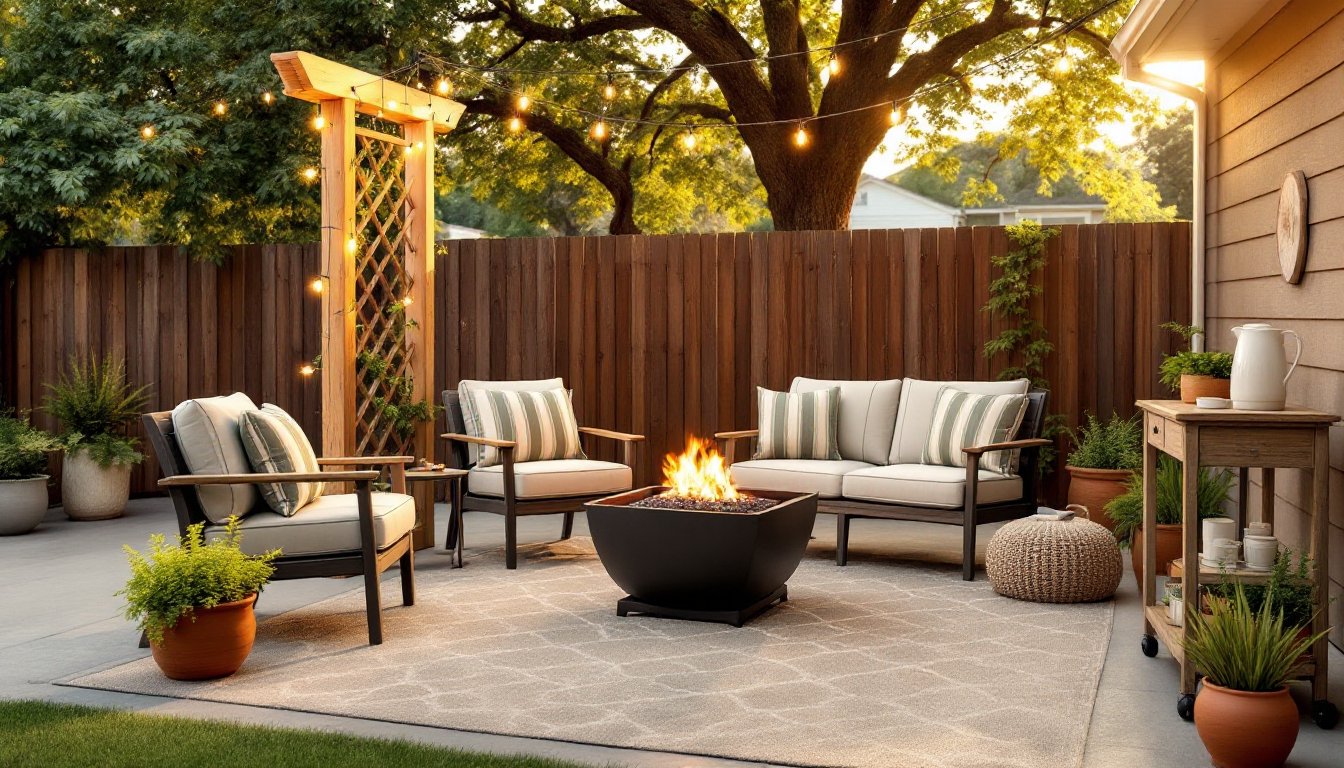
The seating area sets the tone for how the patio gets used. A thoughtful arrangement can make a 10×12-foot space feel like a retreat, while a haphazard setup leaves even a large patio feeling cold.
Furniture selection matters. Opt for pieces sized to the space, oversized sectionals can overwhelm a small patio, while a lone bench in a large area looks unfinished. Mix seating types: a pair of resin wicker chairs with weather-resistant cushions, a small loveseat, or even a teak bench that can pull double duty as a side table. Wicker and metal frames hold up better than untreated wood in humid climates, but all outdoor furniture benefits from a storage plan or covers during the off-season.
Arrangement drives function. Angle seating toward a focal point, a fire pit, garden bed, or even a nice view, rather than lining it up against the house like a waiting room. For conversation areas, keep seats within 8 feet of each other so people don’t have to shout. If the patio serves multiple purposes (dining and lounging), use furniture placement to create visual separation without physical barriers.
Cushions and throw pillows aren’t just decorative, they make hard surfaces usable for more than five minutes. Choose fabrics rated for outdoor use (look for solution-dyed acrylic like Sunbrella or similar): they resist fading and mildew better than indoor textiles. Store cushions in a deck box or shed during heavy rain to extend their lifespan, even if they’re labeled waterproof.
Add Greenery and Potted Plants for Natural Beauty
Plants soften hard edges and add vertical interest, but they need the right containers and placement to thrive without becoming a maintenance headache.
Container choice affects plant health. Terracotta breathes well and works for drought-tolerant plants like succulents or lavender, but it dries out fast in summer heat. Resin or fiberglass planters retain moisture longer and weigh less, helpful if the patio’s on a balcony with weight limits. Ensure every pot has drainage holes: sitting water rots roots faster than underwatering kills them. Elevate pots on plant feet or bricks to prevent staining on concrete and improve airflow.
Plant selection by sun exposure keeps things alive. Full-sun patios (6+ hours of direct light) handle geraniums, petunias, or herbs like rosemary and basil. Shaded or covered patios do better with hostas, ferns, or impatiens. For year-round structure, mix in evergreens like boxwood or dwarf conifers in larger 15-gallon containers.
Vertical gardens and trellises multiply planting space without eating up floor area. Wall-mounted planters, hanging baskets, or a simple trellis with climbing jasmine or clematis add height and privacy. If attaching to siding, use appropriate anchors (masonry screws for brick, toggle bolts for vinyl siding over sheathing). Drip trays under hanging baskets prevent staining on decking below.
Grouping pots in odd numbers (threes or fives) and varying heights creates a more natural look than a straight lineup. Smaller patios benefit from focusing greenery in one or two zones rather than scattering single pots around.
Illuminate Your Patio With Strategic Lighting
Lighting extends patio use past sunset and adds ambiance that overhead floodlights can’t match. A layered approach, combining task, ambient, and accent lighting, works best.
String lights are the go-to for ambient glow. LED Edison-style bulbs pull around 1 watt per bulb and last 15,000+ hours, versus incandescent versions that burn out in a season. Hang them in a zigzag or catenary pattern (slight sag between posts) rather than taut lines: it looks more relaxed and puts less stress on the wire. Secure to screw hooks in fascia boards, posts, or a freestanding frame built from 4×4 pressure-treated lumber. For patios without overhead structure, shepherd’s hooks or poles anchored in 5-gallon buckets filled with concrete provide attachment points.
Pathway and step lights prevent trips and define edges. Low-voltage LED fixtures (typically 12V systems) are safer and easier to install than line-voltage options. Run 14- or 16-gauge landscape wire from a transformer (usually mounted near an outdoor outlet) to fixtures spaced 8 to 10 feet apart. Bury the wire 6 inches deep if crossing a lawn: use conduit if running under pavers. For small patios or rentals, solar path lights with ground stakes offer a no-wiring option, though output and runtime vary with sun exposure.
Accent lighting highlights plantings, architectural details, or water features. Uplights (small spotlights aimed upward) installed at the base of a tree or tall planter create dramatic shadows. Battery-powered LED puck lights work for spaces where running wire isn’t feasible.
Always use fixtures rated for wet or damp locations (check the UL rating). If installing new outlets, they must be GFCI-protected and follow local electrical code, this often requires a permit and a licensed electrician for permanent installations.
Incorporate Outdoor Rugs and Textiles for Warmth
An outdoor rug grounds a seating area and makes a concrete or composite deck feel more finished. Not all rugs are created equal for exterior use.
Material determines longevity. Polypropylene rugs resist mold, dry quickly, and handle rain without falling apart, they’re the workhorse option. Natural fiber rugs (jute, sisal) look great but absorb moisture and can mildew in humid climates or under covered patios with poor airflow: reserve them for fully protected, dry spaces. Recycled plastic (PET) rugs are durable and often made from repurposed materials, appealing for eco-conscious projects.
Sizing and placement follow the same rules as indoor spaces. For seating areas, the rug should extend 12 to 18 inches beyond the furniture on all sides, or at minimum, fit under the front legs of chairs and sofas. An 8×10-foot rug typically suits a standard patio dining set: a 5×7 works for a small conversation cluster.
Rug pads prevent shifting and protect deck surfaces from dye transfer or abrasion, especially on wood or composite decking. Use pads rated for outdoor use (often made from rubber or PVC mesh), indoor rug pads can degrade in UV and moisture. For windy sites, rug anchors or double-sided outdoor carpet tape keep corners flat.
Textiles like outdoor throw blankets or water-resistant poufs add layers without permanent commitment. Store fabric items during heavy weather and winter to avoid premature wear. If working with limited space, consider small patio decorating strategies that maximize every square foot.
Define Zones With Decorative Screens and Dividers
On larger patios or open backyard spaces, dividers create separate zones for dining, lounging, or grilling without building permanent walls. They also add privacy from neighbors or screen utility areas like A/C units or trash bins.
Freestanding privacy screens come in materials from cedar lattice panels to powder-coated aluminum or laser-cut steel. Lattice is budget-friendly and easy to customize (cut to size with a circular saw, paint or stain as needed), but it requires annual maintenance in wet climates. Metal screens cost more upfront but don’t rot or warp: look for rust-resistant finishes. For rentals or temporary setups, screens with weighted bases or planter-box feet avoid the need for anchoring into concrete or decking.
Living dividers, trellises with climbing plants or tall planters with bamboo or ornamental grasses, double as greenery and separation. Clumping bamboo (like Fargesia species) won’t spread aggressively like running varieties. If building a trellis, use pressure-treated 2×4s for the frame and galvanized wire or wood slats for the grid: anchor posts in concrete footings or large containers for stability.
Outdoor curtains on a rod or cable system add a soft, adjustable screen. Sunbrella or polyester outdoor fabric resists fading and mildew. Mount rods to posts or overhead beams with heavy-duty brackets: for cable systems, use stainless steel cable and turnbuckles to tension the line. Curtains work well on covered patios: they’ll whip around and degrade quickly in fully exposed, windy settings.
Planters as dividers create subtle boundaries. A row of matching containers with evergreens or tall grasses establishes a zone without blocking sightlines entirely. This approach shines for defining dining areas on large decks or separating a covered patio lounge from an open grilling zone.
Personalize With Art, Accessories, and Color
Details and finishing touches turn a functional patio into a space with personality. This is where homeowners can inject personal style without heavy lifting or permits.
Outdoor wall art needs to withstand the elements. Metal wall sculptures, ceramic tiles, or sealed wood signs hold up better than canvas prints or paper-based decor. For wooden pieces, apply exterior polyurethane or spar varnish to protect against moisture and UV. Hang art on exterior walls using masonry anchors (for brick or stucco) or corrosion-resistant screws into studs or blocking (for wood siding). Avoid adhesive hooks on hot, sunny walls, they’ll fail.
Color through accessories is the easiest way to refresh patio decor seasonally. Swap cushion covers, add bright ceramic garden stools (which double as side tables), or introduce colorful lanterns and candle holders. Better Homes & Gardens often features seasonal patio palettes that trend toward blues and greens for summer, warmer tones for fall. Stick to two or three main colors to avoid a chaotic look: neutral bases (grays, tans, whites) let accent colors pop without overwhelming a small space.
Functional decor earns its keep. A wooden or metal bar cart holds drinks and condiments during cookouts, then stores plants or gardening tools the rest of the week. Outdoor storage benches hide cushions and pool toys while providing extra seating. Decorative fire pits or chimineas add warmth and a focal point: check local fire codes before installing, some municipalities restrict open flames on patios or balconies.
Wind chimes, birdbaths, or a small tabletop water fountain add sensory layers. Just be mindful of noise, what sounds soothing at home might annoy neighbors in dense housing. For ideas on budget-friendly decorating, focus on DIY projects like painted planters or repurposed furniture over high-end store buys.
Seasonal touches keep things fresh without a full overhaul. String colored lights for holidays, add mums and pumpkins in fall, or hang a weatherproof wreath on a nearby door. For summer inspiration, explore patio decorating ideas for summer that emphasize light, airy textiles and vibrant plantings. According to Country Living, farmhouse-style patios often mix vintage finds (old watering cans as planters, galvanized tubs as drink coolers) with modern comforts for a layered, lived-in feel.
Conclusion
A well-decorated patio doesn’t require a landscape designer or a five-figure budget. With deliberate choices in seating, lighting, greenery, and finishing details, homeowners can build an outdoor space that works hard and looks great. Focus on durable materials, proper installation, and layering elements that serve multiple purposes. The result is a backyard patio that gets used, not just admired from the kitchen window.


