
Table of Contents
ToggleBlue and white is one of those color combinations that never goes out of style. It’s crisp, calming, and works in nearly any home, whether it’s a beach cottage or a city brownstone. The real trick isn’t deciding if it’ll look good, but how to pull it off without ending up with a space that feels too nautical, too cold, or too one-note. This guide walks through practical design strategies, material choices, and a few DIY projects that’ll help anyone create a blue and white bedroom with real staying power.
Key Takeaways
- Blue and white bedroom ideas benefit from the calming psychological effects of blue—which lowers heart rate and blood pressure—while white amplifies light and prevents the space from feeling too dark or saturated.
- Successful blue and white bedroom designs balance multiple blue shades (navy, sky blue, and soft aqua) with crisp white trim and natural textures like linen and sisal to avoid appearing overly nautical or sterile.
- Paint testing on actual walls is essential since lighting dramatically changes how blue tones appear; navy works best as a full-room treatment or with ample light, while sky blue and powder blue are safer for making small rooms feel open.
- Furniture and textiles drive the design foundation—start with a white upholstered headboard or bed frame, then layer textures like chunky knit throws, linen sheets, and strategically placed blue accents through pillows and blankets.
- An 8×10 or larger area rug that extends beyond nightstands grounds the bed and adds visual interest, while consistent picture frames and minimalist wall art keep the focus on the calming color palette.
- Budget-friendly DIY projects like accent wall painting, upholstered headboards built from plywood, stenciled patterns, and refinished furniture allow homeowners to customize their blue and white bedroom without major renovation costs.
Why Blue and White Works So Well in Bedrooms
Blue triggers a physiological response that lowers heart rate and blood pressure, facts backed by color psychology research. That’s why hospitals and spas lean on it. In a bedroom, it translates to a space that genuinely helps people wind down.
White amplifies natural light and keeps the room from feeling heavy. When paired with blue, it acts as a buffer, preventing the space from reading too dark or too saturated. The contrast also adds visual interest without requiring bold patterns or a lot of accessories.
From a practical standpoint, blue and white is forgiving. Scuff marks on white baseboards? Less visible. Want to swap out textiles seasonally? The palette accommodates nearly any accent color, coral, yellow, gray, even black. It’s a foundation that adapts as tastes change, which matters when repainting a bedroom isn’t always on the weekend agenda.
Classic Blue and White Bedroom Styles
Coastal and Nautical-Inspired Designs
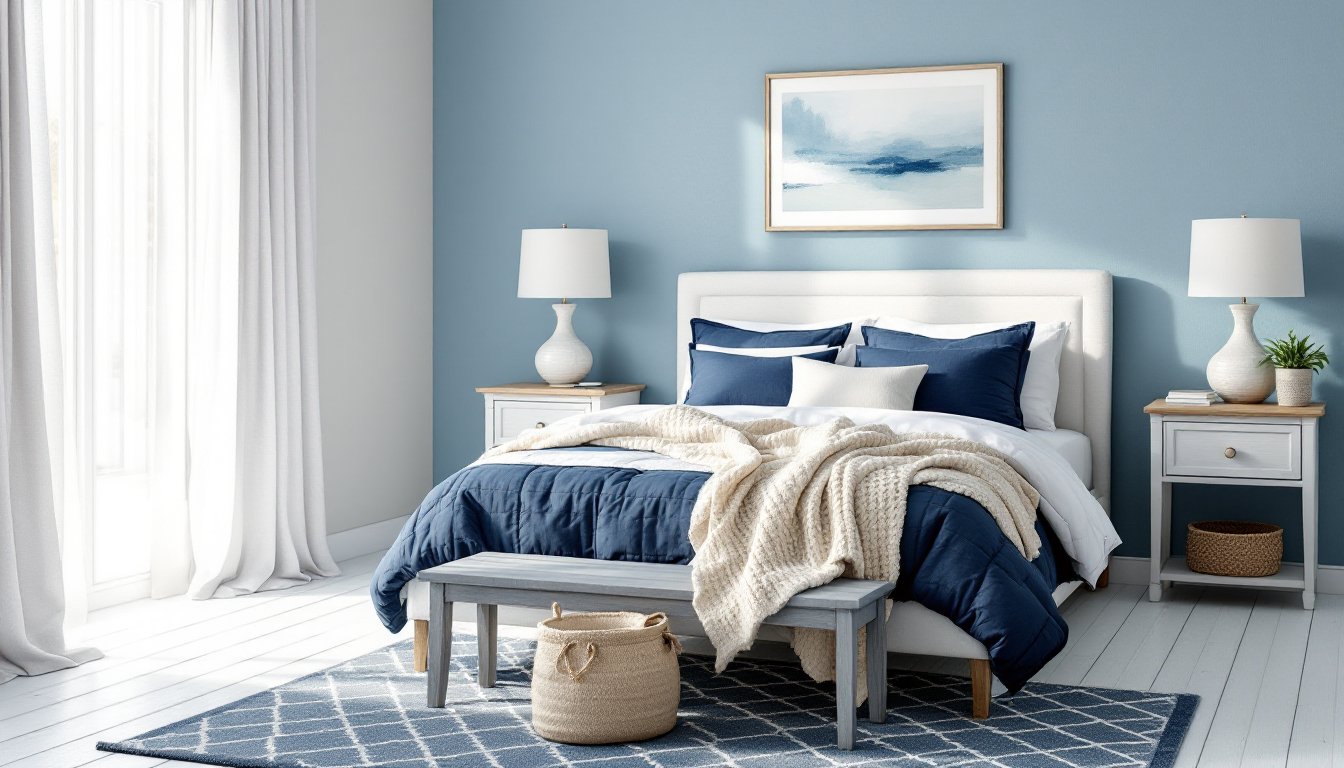
Coastal doesn’t have to mean anchors and rope. The key is layering different blues, navy, sky blue, and soft aqua, against white shiplap or beadboard paneling. Use actual shiplap (nominal 1×6 pine, which measures about ¾” x 5½” milled) if installing new wall treatments: it’s affordable and straightforward to nail up over drywall with a finish nailer.
Textiles do the heavy lifting here. Linen duvet covers in white, paired with blue-striped throw pillows, give a relaxed, lived-in look. Avoid overly themed decor, one or two driftwood pieces or a jute rug is enough. If the room gets good natural light, consider leaving windows minimally dressed with white cotton or linen curtains to maximize that airy feel.
For flooring, wide-plank painted white or weathered gray wood works well. If existing flooring is carpet, a natural fiber area rug (sisal or seagrass) in a 5×8 or 8×10 size grounds the bed and adds texture without competing with the palette.
Traditional and Hamptons Elegance
This style skews more formal. Think navy blue walls (try a satin or eggshell finish for subtle sheen), white crown molding, and tailored furnishings. The contrast between dark blue and bright white trim makes architectural details pop, so it’s worth the extra prep work to get clean paint lines.
Furniture here is classic: upholstered headboards in white linen or blue velvet, wooden nightstands in white or natural oak, and perhaps a tufted bench at the foot of the bed. Lighting matters, polished nickel or brass table lamps with white linen shades add a refined touch.
Bedding should be crisp. White sheets with a high thread count (300-400 is plenty: anything higher is often marketing), a blue duvet or coverlet, and Euro shams in a coordinating pattern. Avoid mixing too many patterns: stick to two, maybe a stripe and a small geometric, and keep the rest solid. Designers often showcase interiors with layered blue tones to achieve this balanced, polished look.
Choosing the Right Shades of Blue for Your Bedroom
Paint chips lie. Always test paint on the actual wall, because lighting changes everything. A soft powder blue might read nearly white in a north-facing room, while a medium blue can look electric under afternoon sun.
Navy and deep blues work best on accent walls or in rooms with ample natural light. They absorb light, so they’ll make a small, dim bedroom feel smaller. If committed to a dark blue, paint all four walls, one dark wall and three white walls can look unfinished. Pair with bright white trim (look for paints labeled “pure white” or “ultra white,” not off-whites) to maintain contrast.
Sky blue and powder blue are safer for full-room applications. They’re light enough to keep the space feeling open but still provide color. These shades pair well with warm white trim (a white with a slight cream or gray undertone) for a softer, less stark look.
Teal and turquoise add energy. They skew more contemporary and work well in modern or eclectic spaces. If using these, keep the rest of the palette simple, white walls, natural wood, minimal patterns.
Paint coverage averages about 350-400 square feet per gallon, but textured walls or dark-to-light transitions often require two coats. Buy an extra quart for touch-ups. Many design platforms feature room visualizers that can help preview color combinations before committing to a full paint job.
Decorating Tips: Furniture, Textiles, and Accents
Start with the bed, it’s the largest piece and sets the tone. A white upholstered headboard is neutral and easy to accessorize around. If going with a wooden bed frame, painted white or natural wood both work: just avoid mixing too many wood tones in one room.
Textiles add warmth and prevent the space from feeling sterile. Layer different textures: a chunky knit throw in cream or gray, linen sheets, a quilted coverlet. Blue accents come in through pillows, a blanket at the foot of the bed, or curtains. Stick to two or three shades of blue max, more than that and it starts to look busy.
Area rugs matter more than people think. A rug that’s too small makes the room feel disjointed. For a queen bed, aim for at least an 8×10 rug that extends beyond the nightstands. Patterns work here, a blue and white geometric or striped rug can anchor the design without overwhelming it.
For wall art, less is more. One large piece above the bed or a gallery wall of smaller frames works. Keep frames consistent, all white, all black, or all natural wood. Blue and white abstract art, coastal photography, or even framed fabric samples can tie into the palette.
Lighting should be functional. Bedside lamps (15-18 inches tall for a standard nightstand) provide task lighting for reading. A ceiling fixture or pendant adds ambient light. Avoid overly trendy fixtures, simple drum shades, classic swing-arm lamps, or ceramic bases in white or blue are safe bets that won’t look dated in five years. Thinking about a bigger refresh? A full bedroom makeover approach can integrate these elements into a cohesive redesign plan.
DIY Projects to Add Blue and White Charm
Painting an Accent Wall: This is the easiest high-impact project. Prep is critical, clean the wall, fill any holes with spackle, sand smooth, and apply painter’s tape along trim and ceiling edges. Use a 2.5-inch angled brush for cutting in and a roller with a ½-inch nap for smooth walls. Two coats will likely be necessary for even coverage, especially with darker blues. Removal of tape should happen when the final coat is still slightly tacky to avoid peeling. Wear a dust mask if sanding and ensure the room is well-ventilated during painting.
Upholstering a Headboard: A DIY upholstered headboard can be built from a sheet of ¾-inch plywood cut to size (a full-size headboard is typically 54 inches wide by 48-60 inches tall). Attach 2-inch foam padding with spray adhesive, wrap with blue or white fabric (duck cloth or linen works well), and staple to the back using a heavy-duty staple gun. Mount to the wall with French cleats or Z-clips rated for the weight, plywood plus foam and fabric will be around 20-30 pounds. This avoids the need to attach directly to the bed frame and makes leveling easier. Goggles are a must when cutting plywood, and gloves protect hands during stapling.
Stenciling a Pattern: Geometric or Moroccan stencils in white over a light blue wall (or vice versa) add pattern without the commitment of wallpaper. Use low-tack painter’s tape to secure the stencil, and apply paint with a foam roller or stencil brush in thin coats to avoid bleed-under. Practice on cardboard first. This project requires patience, rushing leads to smudges.
Refinishing Furniture: A dated wooden dresser or nightstand can be transformed with paint. Strip or sand the existing finish (a random orbital sander with 120-grit sandpaper makes quick work of this), apply a bonding primer, then two coats of satin or semi-gloss paint in white or navy. Topcoat with a water-based polyurethane for durability, especially on high-touch surfaces like drawer fronts. Wear a dust mask during sanding and work in a well-ventilated space. Many interior design sites highlight DIY furniture updates as cost-effective ways to personalize a space without major expense.


