
Table of Contents
ToggleA well-styled coffee table tray isn’t just decorative, it’s functional furniture organizing at its best. Whether corralling remotes and coasters or anchoring a seasonal display, the right tray transforms a cluttered surface into a curated focal point. For homeowners tackling living room updates in 2026, trays offer a low-commitment, high-impact upgrade that doesn’t require tools, permits, or a weekend’s worth of labor. This guide covers material choices, styling strategies, and weekend DIY builds to help anyone create a coffee table setup that looks intentional and lives practically.
Key Takeaways
- Coffee table tray ideas solve clutter problems by creating defined zones on horizontal surfaces while protecting furniture from water rings, scratches, and heat damage.
- Select a tray that occupies one-third to one-half of your table’s surface—on a standard 48-inch table, a 20×14-inch tray strikes the perfect balance between style and function.
- Apply the rule of three by styling trays with odd-numbered objects of varying heights, layered textures, and mixed materials to create visual depth without appearing over-designed.
- Refresh your space seasonally by swapping tray displays with lighter spring/summer palettes and warmer fall tones, or stick with year-round neutrals and rotate single accent pieces.
- DIY enthusiasts can build a custom tray in one weekend using basic woodworking tools, 1×2 pine framing, and plywood, then finish with hardware handles or leather straps for a polished look.
Why Coffee Table Trays Are Essential for Modern Home Decor
Coffee table trays solve the oldest problem in living room design: horizontal surfaces attract clutter. Without boundaries, tables become dumping grounds for mail, devices, and half-finished drinks. A tray creates a defined zone that visually contains everyday items while elevating decorative objects.
From a design standpoint, trays add architectural structure to soft furnishings. They introduce clean lines and material contrast, wood against upholstery, metal against glass, that give rooms depth. In open-concept homes where the coffee table serves multiple users, trays establish personal zones without physical dividers.
Functionally, trays are portable staging areas. They make it easy to clear the table for board games, laptops, or meal service, then restore the display in seconds. For households with kids or pets, that flexibility matters more than any styling trend. Trays also protect table finishes from moisture rings, scratches, and heat damage, extending the life of furniture investments.
Choosing the Right Coffee Table Tray for Your Space
Tray selection starts with measuring the coffee table surface. A tray should occupy one-third to one-half of the table’s top, large enough to make a statement but leaving room for drinks and functional use. On a standard 48-inch rectangular table, a 20×14-inch tray hits the sweet spot. Oversized ottomans or sectional arrangements may accommodate multiple smaller trays instead of one large piece.
Materials, Sizes, and Shapes That Work Best
Wood trays bring warmth and work across farmhouse, mid-century, and transitional styles. Look for solid hardwood (walnut, oak, maple) with dovetail or finger joints if the tray will hold weight. Avoid thin plywood bases that sag under books or potted plants. Sealed or lacquered finishes resist water rings better than raw wood.
Metal trays, particularly powder-coated steel or brushed brass, suit industrial, modern, and glam aesthetics. Handles are critical here: trays over 18 inches wide need sturdy, load-bearing handles, not decorative afterthoughts. Check weld points and corner reinforcements.
Rattan, wicker, and woven trays add texture but require stable frames. Pressed or stapled construction falls apart with regular handling. Hand-woven pieces with wrapped edges and solid wood rims last years.
Acrylic and lucite trays visually disappear, making them ideal for small spaces or glass-top tables. Ensure minimum 1/4-inch thickness to prevent flexing. Cheaper acrylic scratches easily, stick with cast acrylic, not extruded.
Shape follows table geometry. Rectangular trays anchor rectangular or oval tables. Round trays soften angular furniture and work well on square tables. Avoid trays with sharp corners on homes with young children, rounded or chamfered edges prevent injuries.
Classic Coffee Table Tray Styling Ideas
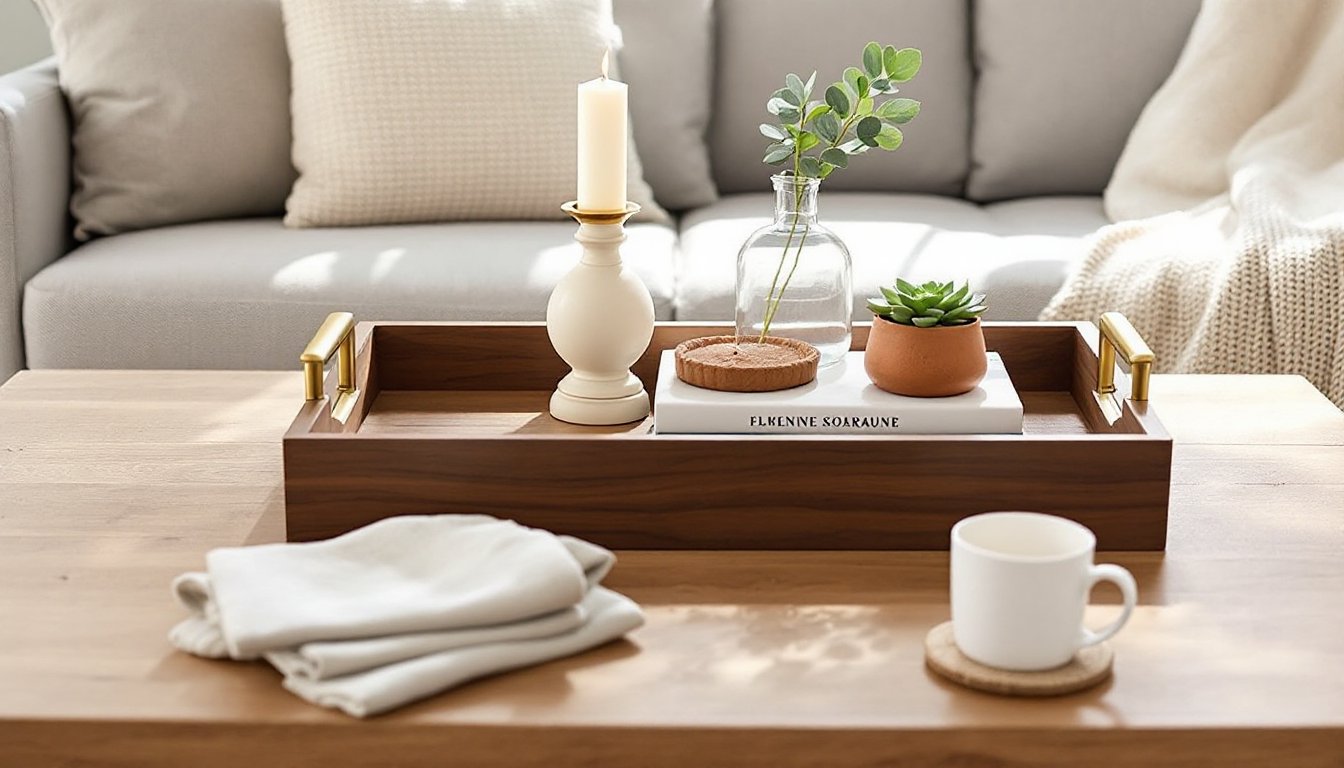
The rule of three dominates coffee table staging: combine objects of varying heights in odd-numbered groups. A tall candlestick, medium vase, and low decorative box create visual rhythm without symmetry. This approach mirrors professional styling techniques used in showrooms and photo shoots.
Layered textures add depth. Pair a wooden tray with a linen coaster, ceramic mug, and metal candle snuffer. The material contrast keeps arrangements from reading flat. Avoid matching sets, three identical votives look staged, not styled.
Books as risers solve the height problem cheaply. Stack two to three hardcovers with spines aligned, then top with a sculptural object or small plant. Coffee table books earn their name here, but any hardcover with a clean spine works. Rotate books seasonally to refresh the look without buying new decor.
Greenery anchors arrangements and improves air quality. Small succulents in ceramic pots require minimal care and tolerate low light. For higher-maintenance looks, faux stems in weighted vases mimic real plants without the upkeep. Avoid tall arrangements that block sightlines across seating areas.
Functional items as decor keeps trays practical. A lidded box holds remotes. A small dish corrals keys or coasters. Matches in an apothecary jar look intentional, not utilitarian. The goal is to make everyday objects feel curated, not hidden.
Seasonal and Themed Tray Displays
Seasonal swaps keep living rooms current without major overhauls. Spring and summer trays lean into lighter palettes and natural materials. Think white ceramic vases with fresh-cut branches, linen-bound books, and glass votives. Shells, driftwood, or coral add coastal notes without turning the space into a beach house cliché.
Fall displays incorporate warmer tones and organic textures. Small pumpkins, gourds, or pinecones pair with amber glass and brass accents. Battery-operated candles in hurricane lanterns add ambiance without open flame risk, critical in homes with curious kids or shedding pets.
Winter and holiday styling works best with restraint. A small evergreen arrangement, a few metallic ornaments, and a scented candle signal the season without cluttering the table. Swap candleholders for mercury glass or matte black to shift the mood. Avoid oversized centerpieces that force drinks and remotes onto side tables.
Year-round neutrals suit those who prefer consistency. Stick to whites, grays, and natural wood tones, then rotate accent pieces. Switching out a single object, a vase, a book cover, a candle color, updates the look with minimal effort. Those interested in creative seasonal crafts can make custom tray inserts or decorative objects that align with each theme.
DIY Coffee Table Tray Projects You Can Make This Weekend
Building a custom tray requires basic woodworking tools and an afternoon. A simple frame tray uses 1×2 or 1×3 pine for sides and 1/4-inch plywood for the base. Cut four frame pieces to length using a miter saw for clean 45-degree corners, or a handsaw with a miter box for budget builds. Sand all edges with 120-grit sandpaper, then assemble with wood glue and 1-1/4-inch brad nails. Attach the plywood base with glue and brads from underneath. Stain or paint as desired, then seal with polyurethane for water resistance.
Hardware handles elevate the finished look. Pre-drill screw holes to prevent splitting, use a 1/8-inch bit for hardwood, slightly smaller for softwood. Centered handles work for symmetry: offset handles add modern asymmetry. Leather strap handles offer a no-drill alternative: staple or rivet heavy leather to the frame underside, leaving a loop at each end.
Epoxy resin trays create high-gloss, waterproof surfaces ideal for outdoor or high-traffic use. Build a plywood base with 1×2 frame walls, seal all seams with caulk, then mix and pour two-part epoxy resin per manufacturer instructions. Add pigments, dried flowers, or embedded objects before the resin cures. Work in a ventilated space and wear nitrile gloves and safety glasses, epoxy fumes irritate lungs and uncured resin burns skin. Cure time runs 24 to 72 hours depending on product and ambient temperature.
Repurposed materials cut costs and add character. Old picture frames become trays with the addition of a plywood backing and handles. Shallow wooden crates or vintage serving trays from thrift stores often need only cleaning and a fresh finish. For those exploring decorative home projects, upcycled trays align with sustainable design trends while keeping budgets in check.
Safety notes: Always wear safety glasses when cutting, sanding, or nailing. Use a dust mask for sanding and a respirator for staining or epoxy work. Ensure adequate ventilation when working with finishes, open windows and run fans to prevent fume buildup.
Conclusion
Coffee table trays deliver outsized impact for minimal investment, whether purchased or built. The right tray organizes daily clutter, anchors seasonal displays, and protects furniture, all while adding visual structure to living spaces. Start with accurate measurements, choose materials that match the home’s wear patterns, and style with odd-numbered groupings and varied textures. For DIYers, a weekend build using basic lumber and hardware creates a custom piece tailored to exact dimensions and finish preferences.


