
Table of Contents
ToggleSummer is deck season. The transition from indoor dining to backyard grilling, evening coffee on the steps, and hosting friends under string lights happens fast. But a deck that worked fine for storage or occasional use often falls flat when it becomes the main living area for three months. Good news: transforming a basic deck into a functional summer space doesn’t require a rebuild, just intentional decorating that addresses comfort, ambiance, and usability. This guide walks through practical, proven approaches to make a deck work harder and look better all season long.
Key Takeaways
- Choose a cohesive color palette of three to four main colors for deck decorating ideas that ties together cushions, rugs, and planters while maintaining an intentional, coordinated look.
- Invest in quality outdoor furniture with weather-resistant fabrics (like Sunbrella) and proper cushioning to ensure comfort and durability throughout the summer season.
- Layer your lighting with string lights for ambiance, LED strips for task lighting, and solar lanterns for tabletops to extend deck usability and enjoyment after sunset.
- Select outdoor-appropriate rugs in polypropylene or PET materials that resist moisture and UV fading, and size them so furniture legs sit fully on the rug to anchor zones visually.
- Incorporate shade solutions like market umbrellas, shade sails, or retractable awnings to keep the deck comfortable during peak sun hours and protect textiles from UV damage.
- Add greenery with appropriately sized planters (14–20 inches diameter) and heat-tolerant plants like petunias and geraniums to soften hard surfaces and bring seasonal color to your deck.
Choose a Cohesive Color Palette That Reflects Summer
A cohesive color scheme pulls a deck together faster than any single piece of furniture or decor. Start by assessing what’s already fixed: the deck boards, railing color, and house siding. These elements set the base palette.
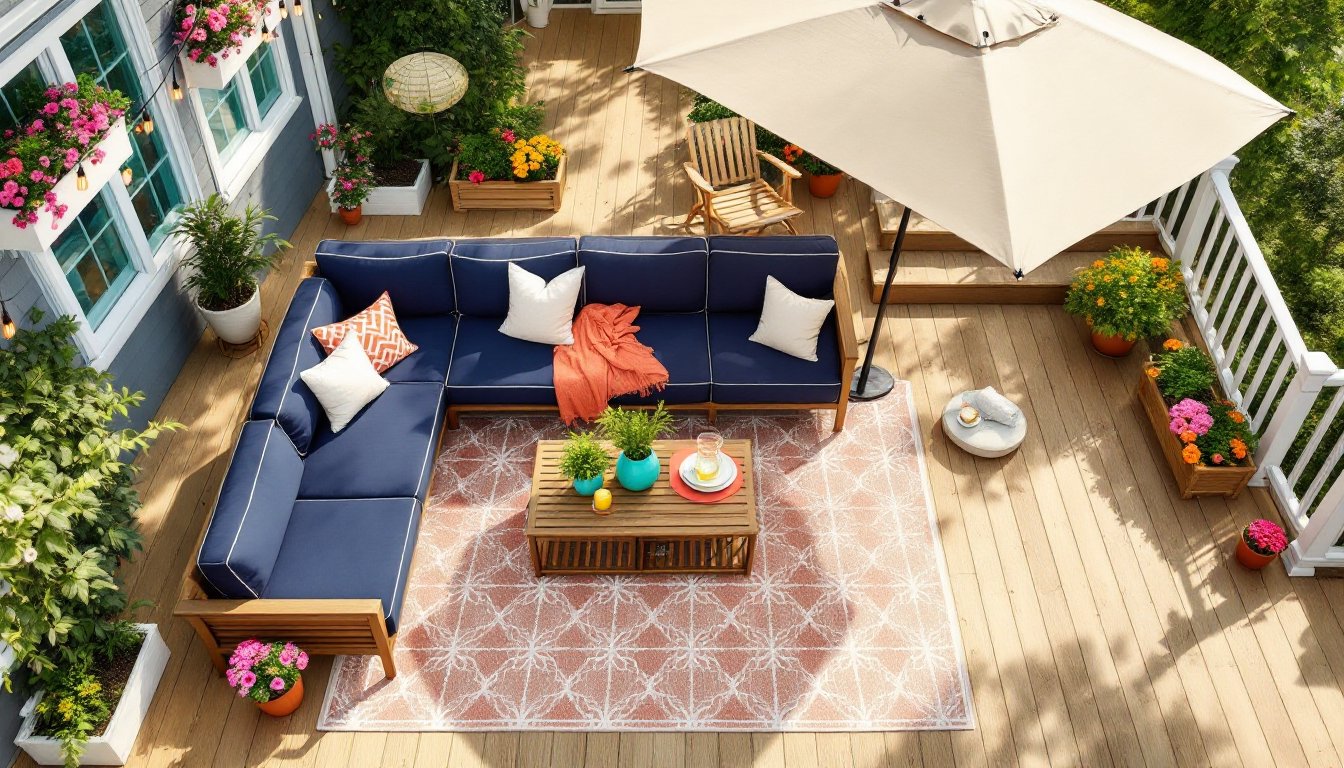
For a classic summer look, coastal palettes (navy, white, sandy beige, and coral) work well on natural wood or gray composite decking. If the deck features darker stain or composite in brown tones, consider warm earthy schemes, terracotta, olive green, burnt orange, and cream. Bright, tropical palettes (turquoise, lime, fuchsia, and sunny yellow) suit poolside decks or homes with neutral exteriors that can handle bold accents.
Once the palette is chosen, apply it across cushions, throw pillows, outdoor rugs, planters, and table linens. Limiting the scheme to three or four main colors keeps the look intentional rather than chaotic. Reserve one accent color for small pops, a brightly colored lantern, a single bold planter, or a set of drink coasters.
Avoid mixing too many patterns in the same space. Stripes and solids work together: mixing florals, geometric prints, and ikat patterns in the same sightline usually doesn’t. Stick to one patterned element per seating zone and let solids balance it out.
Add Comfortable and Stylish Outdoor Furniture
Furniture makes or breaks a deck’s usability. Uncomfortable seating means guests migrate indoors: wobbly tables mean drinks spill and dinners get cut short.
Start with the deck’s primary function. For dining, a weather-resistant table with a powder-coated aluminum or steel frame and slatted top (to allow water drainage) works best. Pair it with stackable chairs that store easily off-season. For lounging, modular sectionals in all-weather wicker or powder-coated aluminum provide flexibility, rearrange sections for different group sizes or solo relaxation.
Cushion fabric matters as much as the frame. Look for solution-dyed acrylic fabrics (Sunbrella is the known standard) rated for outdoor use. They resist fading, mildew, and moisture better than untreated cotton or polyester. Cushions should have removable, washable covers and quick-dry foam cores, not the cheap stuff that holds water like a sponge.
If the budget’s tight, start with one quality seating piece and build around it. A sturdy loveseat or a pair of lounge chairs beats a full set of flimsy furniture. Add inexpensive folding chairs for overflow seating during parties. Side tables and coffee tables can be DIY projects, cinder blocks and a stained 2×10 plank make a serviceable low table for under $30 in materials.
Consider scale. Oversized furniture overwhelms a small deck: undersized pieces make a large deck feel empty and uncomfortable. Measure the deck, map furniture placement on paper, and leave at least 36 inches of clearance for walkways and chair pullout.
Create Ambiance with Outdoor Lighting
Once the sun sets, lighting extends deck use and sets the mood. Overhead porch lights work for task lighting, grilling, reading, eating, but they don’t create ambiance.
String lights are the workhorse of deck lighting. Edison-style bulbs on a black or brown cord (avoid white unless the deck is painted white) provide warm, dimmable light. Run them overhead along the railing, zigzagged across open joists, or strung from posts to a nearby tree. Use outdoor-rated cable clips or screw-in hooks designed for exterior use, adhesive clips fail in heat and humidity.
For task lighting, consider LED strips mounted under the railing cap or along stair risers. These are low-voltage (12V or 24V systems), which means they’re safer and can be DIY-installed without an electrician in most cases. Check local codes: some jurisdictions require permits for any permanent outdoor electrical work.
Solar lanterns and rechargeable LED candles work well for tabletops and add layers of light without additional wiring. Look for models with replaceable batteries, most cheap solar lights die after one season because the battery isn’t user-serviceable.
For larger decks, a freestanding post lamp or bollard lights at entry points improve safety and visibility. Battery-operated or plug-in options are fine for renters or those avoiding electrical work. Hardwired fixtures require a weatherproof junction box and GFCI protection per NEC standards.
Always use outdoor-rated extension cords (look for the “W-A” designation) and GFCI-protected outlets. Indoor cords deteriorate quickly outdoors and pose a fire or shock hazard.
Incorporate Greenery and Planters for Natural Beauty
Plants soften hard deck surfaces and add seasonal color. The key is choosing containers and plants that tolerate the specific conditions, full sun, reflected heat from the deck surface, wind exposure, and limited root space.
Container size matters. Small pots (under 10 inches in diameter) dry out fast in summer heat and require daily watering. Go with larger planters, 14- to 20-inch diameter containers for most annuals, and even bigger for shrubs or small trees. Bigger pots hold more soil, retain moisture longer, and provide better root insulation.
For materials, resin and fiberglass planters are lightweight and durable but can blow over in wind if not weighted. Glazed ceramic looks great but can crack in freeze-thaw cycles if left out year-round in cold climates. Wood planters (cedar or redwood) are classic but need liner inserts to prevent rot: unlined wood planters last maybe two seasons before they fall apart.
Plant choices depend on sun exposure. For full-sun decks (6+ hours of direct sun), go with heat-tolerant annuals: petunias, geraniums, portulaca, zinnias, and marigolds. Ornamental grasses like fountain grass or blue fescue add texture and movement. For part shade, try coleus, impatiens, begonias, or ferns.
Vertical planters and railing boxes maximize space on smaller decks. Attach them securely, a planter box full of wet soil weighs 40+ pounds and can pull screws out of a railing if not properly mounted to structural posts.
Group containers in odd numbers (3, 5, 7) for a more natural look. Vary heights using plant stands or upturned pots as risers. Water-absorbing polymer crystals mixed into potting soil help reduce watering frequency, but they’re not a substitute for proper irrigation. Drip irrigation kits designed for container gardens are worth considering if the deck has 10+ pots.
Define Zones with Outdoor Rugs and Textiles
Outdoor rugs define functional zones on a deck, dining area, lounge space, entry, and make hard surfaces more comfortable underfoot. Not all outdoor rugs are created equal.
Look for polypropylene or PET (recycled plastic) rugs labeled for outdoor use. These materials resist moisture, mildew, and UV fading. Natural fiber rugs (jute, sisal, seagrass) are marketed as “indoor/outdoor” but degrade quickly in wet conditions and aren’t ideal for uncovered decks.
Size the rug so furniture legs sit fully on it, not halfway off. For a dining set, the rug should extend at least 24 inches beyond the table on all sides to accommodate pulled-out chairs. For a seating area, the rug should fit under the front legs of sofas and chairs, anchoring the grouping visually.
Rug pads designed for outdoor use prevent slipping and protect deck boards from dye transfer or moisture trapping. Skip the indoor rug pads, they disintegrate outdoors.
Textiles like throw pillows and blankets add comfort but need to be weather-appropriate. Outdoor pillows with water-resistant covers and synthetic fill hold up to moisture: indoor pillows mildew and fall apart. Store cushions and textiles in a deck box or bring them inside during heavy rain to extend their lifespan.
For design flexibility similar to covered patio spaces, layering rugs can create visual interest, place a smaller patterned rug over a larger neutral one. Just make sure the bottom rug has a non-slip backing.
Add Shade Solutions for Comfort and Style
A deck in full sun becomes unusable by midday in summer. Shade solutions make the space comfortable and protect furniture and textiles from UV damage.
Umbrellas are the simplest option. A 9- to 11-foot market umbrella with a crank lift and tilt function covers a dining table or a pair of lounge chairs. Choose a base heavy enough for the umbrella size, general rule is 10 pounds of base weight per foot of canopy diameter (so a 9-foot umbrella needs a 90-pound base). Cantilever umbrellas offer more flexible shade placement but require even heavier bases and take up floor space.
Fabric choice matters: solution-dyed acrylic in a dark color blocks more UV than light-colored polyester. Look for a UPF rating of 50+ if sun protection is a priority.
Shade sails are a modern alternative, triangular or square fabric panels tensioned between anchor points (posts, house, trees). They require solid mounting: lag bolts into wall studs, through-bolts on posts, or concrete footings for freestanding poles. Improperly tensioned sails flap and tear in wind. If the deck doesn’t have suitable anchor points, this becomes a more involved install.
Retractable awnings mount to the house and extend over the deck. Manual versions crank out: motorized ones use a remote. These typically require professional installation and can cost $500–$3,000 depending on size and features. They’re a semi-permanent solution and may require a permit depending on local codes.
For a lower-commitment option, outdoor curtains on a tension rod or cable create privacy and shade. Use outdoor-rated fabric (solution-dyed acrylic or polyester) and stainless steel hardware to avoid rust. Curtains work best on covered decks or in areas with minimal wind.
Decks with similar constraints to small patio layouts benefit from vertical shade, trellises with climbing vines (clematis, morning glory, or hops) or privacy screens made from lattice panels. These take time to establish but provide natural, living shade.
For those interested in additional outdoor decor inspiration, many design principles transfer between porches and decks with slight material adjustments. Budget-conscious decorators can apply similar cost-saving strategies found in budget-friendly patio ideas to deck projects, thrift store finds, DIY projects, and strategic splurges on key pieces.
Vertical elements inspired by pergola designs can also add architectural interest and shade when a full pergola structure isn’t feasible, and narrow porch solutions translate well to linear deck layouts along the back of a house.
Conclusion
A well-decorated summer deck combines function and style, comfortable seating, layered lighting, weather-resistant textiles, and enough shade to make the space usable all day. Prioritize durable materials, proper installation, and practical layout over trendy decor that won’t last a season. Start with one or two foundational upgrades, then build from there as budget and time allow.


