
Table of Contents
ToggleAdding a hot tub to a deck isn’t just about dropping a tub on some boards and calling it done. It’s a combination of structural planning, design vision, and practical decision-making that can turn an ordinary backyard into a year-round escape. Whether someone’s sketching out plans for a new deck or retrofitting an existing one, understanding weight loads, installation types, and finishing details makes the difference between a project that lasts decades and one that sags or fails inspection. This guide walks through the structural must-knows, design options, and finishing touches that make deck hot tub installations both safe and stunning.
Key Takeaways
- Deck hot tub installations require careful structural planning, with filled tubs weighing 3,000–6,000 pounds, necessitating deck framing engineered for at least 100 psf live load capacity.
- Permits and professional electrical work are mandatory for deck hot tub projects, including a dedicated 240-volt circuit with GFCI protection and local building code inspections.
- Sunken hot tub designs offer a sleek, integrated aesthetic but demand removable access panels for maintenance, while elevated installations provide easier service access and flexibility for relocation.
- Privacy solutions like lattice screens, pergolas, or evergreen plantings transform deck hot tub spaces into secluded retreats while supporting proper airflow and drainage.
- LED lighting, slip-resistant pathways, and built-in storage or grab bars enhance both safety and ambiance around your deck hot tub.
- Proper drainage planning, moisture barriers, and quality insulated covers protect the deck structure and reduce long-term maintenance costs for year-round enjoyment.
Why Add a Hot Tub to Your Deck?
A deck-mounted hot tub extends usable outdoor living space well beyond summer. It creates a focal point for gatherings, offers therapeutic benefits after long workdays, and can increase property value when installed correctly.
Unlike standalone tubs placed on concrete pads, deck-integrated units blend seamlessly with existing outdoor architecture. They’re accessible directly from the home, which matters during winter months when navigating icy walkways to a distant hot tub loses appeal fast.
From a design perspective, decks offer flexibility. They can accommodate privacy screens, built-in seating, planters, and lighting in ways that ground-level installations can’t match. But that flexibility comes with engineering responsibilities, decks must be built or reinforced to handle significant weight, and drainage, electrical, and access considerations all come into play before the first board gets cut.
Planning Your Deck Hot Tub Installation
Before selecting a tub or sketching layouts, homeowners need to answer three questions: Can the deck support the weight? Where will utilities run? And does the project require permits?
Most jurisdictions require permits for hot tub installations, especially when they involve structural modifications or new electrical work. Local building codes vary, but expect inspections for both framing and electrical. Skipping this step can result in fines, insurance issues, or costly teardowns.
Electrical requirements typically involve a dedicated 240-volt circuit with GFCI protection, run by a licensed electrician. Hot tubs draw 30–60 amps depending on size and features, so existing panels may need upgrades. Conduit runs, disconnect boxes, and proper grounding are non-negotiable, this isn’t a DIY electrical project unless someone holds the proper license.
Water supply and drainage also matter. Most owners fill tubs with a garden hose, but drainage needs a plan. Some municipalities prohibit draining chlorinated water into storm drains. A sump pump or drainage line to a sanitary sewer may be required.
Structural Considerations and Weight Requirements
A filled hot tub can weigh 3,000 to 6,000 pounds depending on size and occupancy. That’s roughly equivalent to parking a small car on the deck. Standard residential decks are designed for 50 pounds per square foot (psf) live load, which won’t cut it.
To support a hot tub, the deck’s framing must be engineered to handle 100 psf or more in the tub’s footprint. This usually means:
- Closer joist spacing: 12 inches on-center instead of the standard 16 inches.
- Larger joists: Upgrading from 2x8s to 2x10s or 2x12s, depending on span.
- Additional beams and footings: Concentrated loads require posts and footings directly beneath the tub, often extending below the frost line.
- Blocking and lateral bracing: Prevents joist deflection and movement under shifting loads.
Retrofitting an existing deck almost always requires professional evaluation. A structural engineer or licensed contractor can assess current framing, calculate load paths, and design reinforcements. Trying to eyeball it or rely on online calculators for something this heavy is a recipe for catastrophic failure.
Deck material also matters. Pressure-treated lumber is standard for framing, but composite or PVC decking can handle hot tub weight if properly supported underneath. The surface decking itself doesn’t carry the load, the joists, beams, and posts do.
Sunken and Recessed Deck Hot Tub Designs
Sunken hot tubs sit flush with or slightly below the deck surface, creating a sleek, integrated look. They require more planning and framing work but deliver a high-end aesthetic that feels like a permanent part of the home.
To execute this design, the deck is built with a cutout framed around the tub’s dimensions. The tub sits on a reinforced platform below the main deck level, with decking surrounding the rim. Access steps are often built into the deck itself, eliminating the need for exterior tub steps.
One advantage: easier entry and exit, especially for older adults or anyone with mobility concerns. The lowered profile also reduces visual bulk, making the tub less dominant on smaller decks.
The trade-off? Maintenance access becomes critical. Hot tubs need regular service, pumps fail, heaters need replacement, and plumbing connections leak. Sunken designs must incorporate removable deck panels or hatches around all service points. Skipping this detail turns a simple pump replacement into a demo project involving saws and pry bars.
Drainage is another consideration. Sunken tubs can trap water between the tub shell and surrounding framing, leading to rot. Installing a moisture barrier, ensuring positive drainage away from the tub, and using rot-resistant materials like PVC trim or composite blocking all help.
Many landscaping and plant integration ideas pair well with sunken tub designs, using low-profile greenery to soften edges without blocking sightlines.
Elevated and Above-Deck Hot Tub Ideas
Above-deck installations are simpler and more forgiving. The tub sits on top of the deck surface, supported by reinforced framing below. This approach works well for existing decks that can be strengthened without major reconstruction.
Elevated tubs make service access straightforward, everything’s visible and reachable. They’re also easier to remove or relocate if someone moves or upgrades to a different model.
Visually, above-deck tubs benefit from creative skirting or surround treatments. Built-in benches, planter boxes, or tiered decking can disguise the tub’s exterior and create integrated seating. Some homeowners build matching storage cabinets nearby for towels, chemicals, and cleaning supplies.
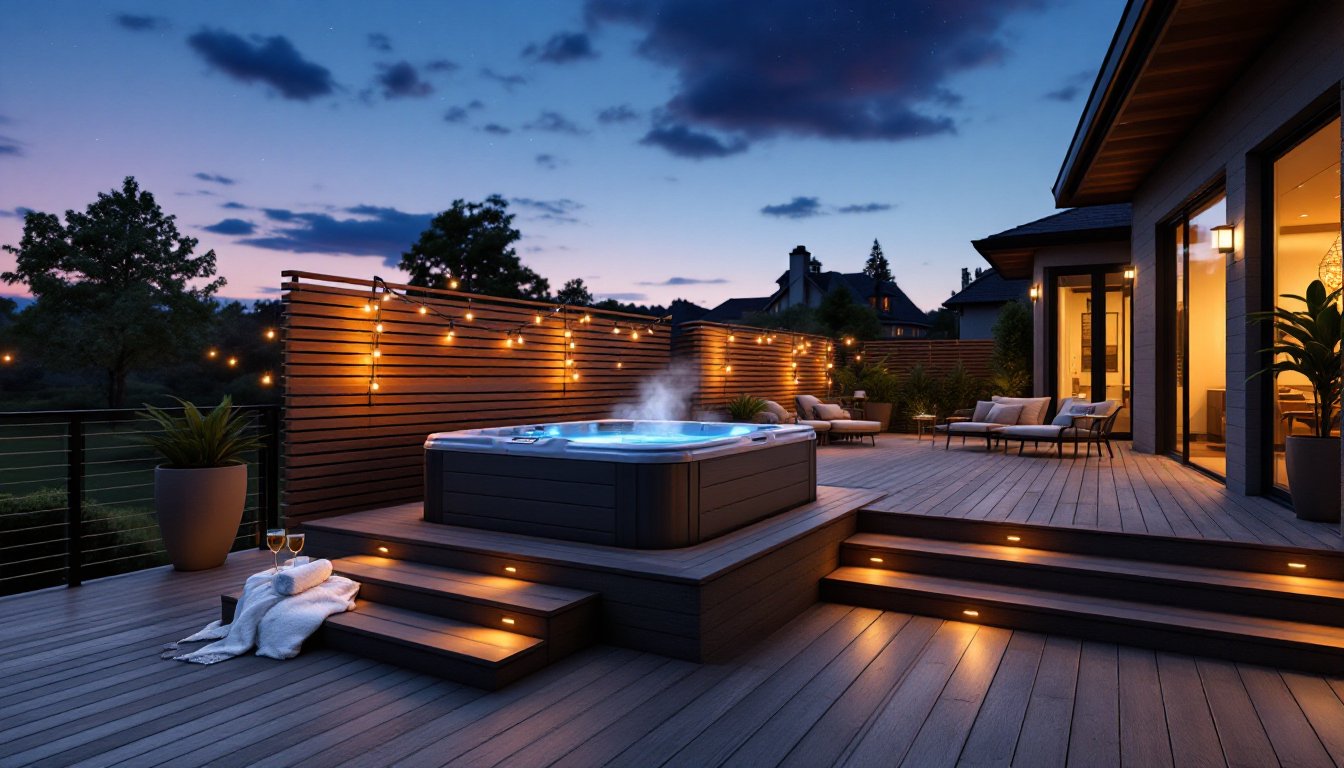
Another option: a raised platform or deck extension specifically for the tub. This creates a distinct zone within the larger deck, often elevated 6–12 inches. It emphasizes the tub as a focal point and can incorporate features like outdoor seating arrangements or surrounding lounge space.
Railing integration matters here. If the hot tub sits against or near the deck’s edge, railings may need to run behind or beside the tub. Some designs incorporate lower rails (36 inches) that don’t block tub users’ views but still meet code for fall protection.
For elevated decks (second story or higher), wind exposure becomes a factor. Tub covers and windbreaks help, but expect faster heat loss and higher operating costs compared to ground-level or sheltered installations.
Privacy and Shelter Solutions for Deck Hot Tubs
Few things kill the hot tub vibe faster than feeling like the neighborhood’s watching. Privacy screens, fencing, and shelters turn an exposed tub into a secluded retreat.
Lattice panels are a budget-friendly option. They provide partial screening, allow airflow, and support climbing plants like clematis or jasmine for added greenery. Mount them to posts anchored into the deck framing or adjacent to the tub.
Solid privacy walls offer complete screening. Horizontal slat fencing (popular in contemporary designs) or vertical board-and-batten styles work well. Keep them 6–8 feet tall for full coverage, but check local codes, some municipalities restrict fence height near property lines.
Pergolas and gazebos add overhead shelter without fully enclosing the space. A pergola with retractable shade cloth or outdoor curtains provides adjustable coverage. Gazebos with screened panels keep bugs out while maintaining airflow, critical for preventing mold and mildew around the tub.
For year-round use in colder climates, some homeowners install insulated hot tub enclosures or three-season structures. These are semi-permanent shelters with removable panels, allowing open-air use in summer and weather protection in winter. They often require separate permitting as accessory structures.
Plantings can serve as natural privacy barriers. Evergreens like arborvitae or skip laurel provide year-round screening. Ornamental grasses, bamboo (clumping varieties to avoid invasive spread), or tall perennials like hibiscus add seasonal interest. Just avoid planting too close to the tub, root systems can interfere with footings, and falling leaves mean extra maintenance.
Integrating covered outdoor spaces nearby creates a cohesive flow between the hot tub zone and other deck areas.
Lighting, Landscaping, and Finishing Touches
Lighting transforms a hot tub deck from functional to inviting. Low-voltage LED lighting is the go-to choice, it’s energy-efficient, safe around water, and available in countless styles.
Recessed deck lights installed along steps, railings, or around the tub perimeter improve safety and ambiance. Post cap lights add soft illumination without glare. String lights or lanterns create a relaxed, social atmosphere, especially when paired with seasonal outdoor decor.
Many modern hot tubs include integrated LED lighting, but adding external fixtures gives more control over mood. Dimmable systems or color-changing LEDs offer flexibility for different occasions.
Landscaping around the tub softens hardscape and adds visual interest. Container gardens work well on decks, large planters with evergreens, ornamental grasses, or flowering shrubs can be repositioned as needed. Choose plants that tolerate splashing and higher humidity.
Pathways leading to the tub should be slip-resistant. Textured composite decking, outdoor rugs, or rubber pavers reduce the risk of falls on wet surfaces. If the tub’s located away from the house, consider solar-powered path lights or low-voltage fixtures to mark the route.
Storage solutions keep the deck organized. Built-in benches with lift-top seats hold towels and accessories. Weatherproof cabinets or deck boxes store chemicals, cleaning tools, and pool toys out of sight.
Safety details matter. Keep a first-aid kit nearby, ensure GFCI protection on all outlets, and post hot tub safety rules (time limits, temperature settings, no glass containers) if kids or guests use the tub regularly. Handrails or grab bars near tub entry points help users with balance, especially on wet decking.
For finishing touches, consider a towel bar or hooks mounted on nearby posts, an outdoor sound system (Bluetooth speakers in weatherproof housings work well), and a small side table for drinks. Some homeowners install an outdoor shower or rinse station to wash off before entering the tub, which reduces chemical and filter maintenance.
Finally, don’t overlook the tub cover. A quality insulated cover reduces heat loss, keeps debris out, and improves safety. Cover lifts make removal easier and extend cover life by reducing wear from dragging. Incorporating a small deck storage area for the cover when it’s off the tub keeps things tidy and accessible.


