
Table of Contents
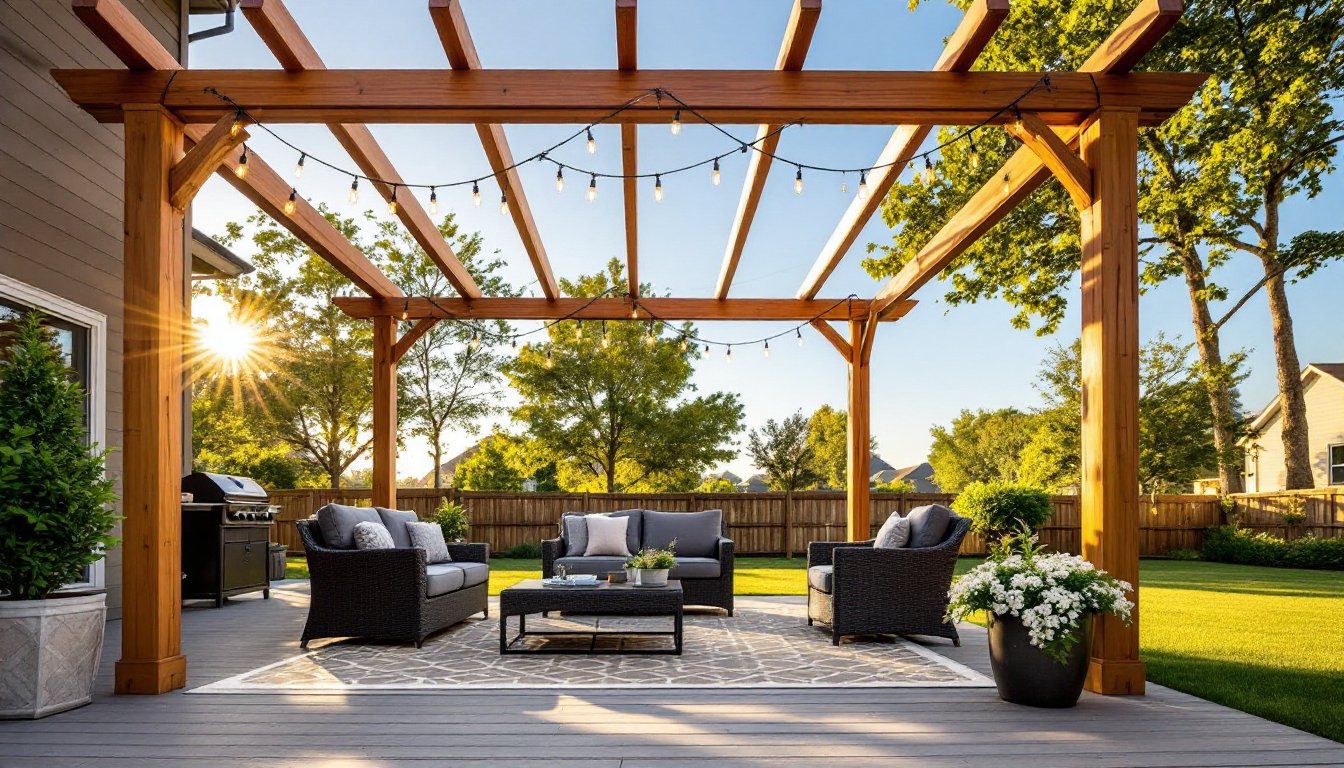
ToggleA deck is great. A deck with a pergola? That’s where the magic happens. Adding a pergola instantly transforms a flat, sun-scorched platform into a layered, inviting outdoor room. It defines space, provides partial shade, and gives you vertical real estate for hanging plants, string lights, or retractable canopies. Whether you’re building from scratch or retrofitting an existing deck, the pergola is the structural upgrade that pays dividends in both function and curb appeal. Here’s how to approach the design, from material selection to shade solutions and decorating, without overbuilding or overspending.
Key Takeaways
- A deck with pergola ideas transforms an open platform into a functional outdoor room by providing partial shade (20–50% UV reduction), defining zones, and creating vertical space for lighting and plants.
- Wood remains the most affordable and DIY-friendly material at $2–3 per linear foot for pressure-treated pine, while metal and composite options offer low-maintenance alternatives at higher price points.
- Pergola shade solutions range from budget-friendly shade cloth ($0.50–1.50 per square foot) to retractable canopies ($300–800) and polycarbonate panels, each offering different levels of coverage and durability.
- A basic 10×10 pressure-treated pergola can be built for $400–700 in materials using simplified design hacks, standard tools, and dimensional lumber purchased in bulk from local suppliers.
- Proper fastening and hardware—including galvanized/stainless steel connections, GFCI-protected electrical circuits, and structural reinforcement in high-wind zones—ensure safety and longevity of your deck with pergola installation.
- Furnishing a pergola deck with all-weather wicker seating, LED lighting, polypropylene rugs, and stainless steel hanging hardware completes the outdoor room while requiring minimal maintenance.
Why Add a Pergola to Your Deck?
Pergolas serve a practical purpose: they break up the visual monotony of an open deck and create defined zones for dining, lounging, or grilling. Without walls or a solid roof, they maintain airflow while reducing direct sun exposure by roughly 20–50%, depending on rafter spacing and orientation.
From a structural standpoint, pergolas are typically post-and-beam assemblies anchored to the deck frame or footings below. Most residential designs use 6×6 posts, 2×6 or 2×8 rafters, and 2×2 or 2×4 cross slats. Spacing those slats at 12–16 inches on center gives you dappled shade: tighter spacing increases coverage but reduces airflow.
Permitting note: If your pergola is freestanding and under 200 square feet with no electrical or plumbing, many jurisdictions treat it as an accessory structure that doesn’t require a permit. But always check local code, attachment to the house or a covered roof can trigger permit requirements. When in doubt, call your building department before cutting lumber.
Classic Wooden Pergola Designs for Timeless Appeal
Wood remains the go-to for DIYers because it’s affordable, workable with standard tools, and blends naturally with most deck materials. Pressure-treated pine is the budget king: roughly $2–3 per linear foot for dimensional lumber, and it holds up well if sealed every 2–3 years. For a more refined look, cedar and redwood resist rot and insects without chemical treatment, but expect to pay $4–6 per linear foot.
Design variations:
- Flat-top pergola: Horizontal rafters with parallel slats. Simple to build, clean lines, works well over modern deck layouts.
- Gabled pergola: Peaked roof frame adds architectural interest and sheds rain more effectively. Requires more complex joinery and angled cuts, consider a miter saw for accuracy.
- Arched pergola: Curved rafters soften the profile. You’ll need to laminate thin strips or purchase pre-curved beams, which bumps up cost and complexity.
Construction tip: Always use galvanized or stainless steel hardware. Standard deck screws will rust out in 5–7 years. Simpson Strong-Tie makes post bases and rafter ties rated for outdoor use, spend the extra $15 per connection and save yourself a rebuild.
For those seeking more pergola decorating ideas, wooden frames offer endless customization with stains, lattice inserts, and climbing vines like wisteria or clematis.
Modern Metal and Composite Pergola Options
If you’re not interested in annual sealing and termite checks, metal and composite pergolas deliver low-maintenance performance. Aluminum kits run $1,500–4,000 for an 10×12 structure and typically include powder-coated posts, beams, and shade louvers. They’re lightweight, rust-resistant, and often come with integrated LED lighting channels.
Steel pergolas offer a more industrial aesthetic. Powder-coated square tubing (2×2 or 3×3 inch) can span longer distances than wood without sagging, but steel is heavy, plan for a two-person install and ensure your deck frame can handle the additional load. For outdoor patio decorating with a modern edge, black or charcoal steel pairs well with composite decking and concrete pavers.
Composite and vinyl pergolas mimic wood grain but won’t split, warp, or rot. Brands like Trex and TimberTech offer pergola kits that match their decking lines. Expect to pay 30–50% more than wood, but you’ll never sand or stain again. The main trade-off: composite posts can flex in high wind, so diagonal knee braces or guy wires may be necessary in exposed locations.
Pro tip: Metal pergolas often require different fastening methods. Use self-tapping screws for aluminum and pre-drill steel to avoid stripping threads. Composite posts are hollow, back them with pressure-treated 4×4 inserts for anchoring hardware.
Pergola Roof and Shade Solutions
A bare pergola provides minimal shade, around 20% UV reduction depending on slat density. For real relief, you’ll need to add a roof or shade layer.
Retractable canopies are the most flexible option. Canvas or shade-cloth panels slide on track systems or wire cables, giving you full sun, partial shade, or complete coverage on demand. Sunbrella fabric is the standard, acrylic-coated, UV-resistant, and available in 100+ colors. Budget $300–800 for a quality canopy kit sized for a 10×12 pergola.
Polycarbonate panels offer permanent, waterproof coverage. Clear or bronze-tinted sheets (typically 8mm or 10mm twin-wall) install over the rafters with aluminum H-channels and screw-down caps. They block 99% of UV but still let light through, ideal if you want a covered space without the cave effect. Expect to pay $3–5 per square foot for panels and trim.
Shade cloth is the budget route. Knitted polyethylene fabric comes in densities from 30% to 90% shade. Stretch it over the top and staple or zip-tie it to the frame. It won’t last more than 3–5 years, but at $0.50–1.50 per square foot, it’s easy to replace. For expert insight on pergola construction basics, this resource covers materials and structural considerations.
Living roofs are the long game: train climbing plants like grapevines, hops, or passionflower over the rafters. You’ll get natural shade, seasonal interest, and zero material cost, but it takes 2–3 growing seasons to fill in. Install stainless steel cable or wire mesh between rafters to guide tendrils.
Safety note: Any solid or semi-solid roof increases wind load. In high-wind zones (coastal, plains, mountain), consult a structural engineer or use hurricane ties to reinforce post-to-beam connections.
Decorating and Furnishing Your Pergola Deck
Once the structure’s up, furnishing and decor turn the pergola into a usable room. Start with seating. All-weather wicker and powder-coated aluminum frames hold up better than untreated wood or wrought iron. Cushions should have solution-dyed acrylic covers (Sunbrella, again) and quick-dry foam cores, anything else will mildew in a season.
Lighting: String lights are easy but overdone. For a cleaner look, install low-voltage LED strip lighting along the inside edge of the beams or recessed puck lights in the posts. A 12V transformer and 100 feet of wire runs about $150. If you’re adding electrical, pull a permit, outdoor circuits require GFCI protection per NEC 210.8.
Rugs and textiles: Outdoor rugs anchor furniture groupings and define zones. Look for polypropylene or PET (recycled plastic) construction, both resist fading, mold, and stains. Hose them off as needed.
Vertical elements: Hang planters, lanterns, or even a retractable privacy screen from the pergola beams. Use stainless steel S-hooks or screw-in eye bolts rated for the load. A 10-inch hanging planter with wet soil weighs 15–20 pounds, don’t trust drywall anchors or finish nails.
For smaller spaces, small patio decorating strategies, like corner benches and fold-down tables, maximize function without crowding the pergola footprint.
Budget-Friendly DIY Pergola Ideas
You don’t need a $5,000 kit to get a solid pergola. A basic 10×10 pressure-treated structure built from scratch costs $400–700 in materials if you shop smart. Buy dimensional lumber in bulk from a local yard, not a big-box store, you’ll save 20–30%.
Cost breakdown (10×10 PT pine pergola):
- (4) 6×6×10 posts: ~$200
- (4) 2×8×10 beams: ~$80
- (10) 2×4×10 rafters and slats: ~$100
- Hardware (brackets, screws, anchors): ~$120
- Concrete for footings: ~$40
Tool requirements: Circular saw, drill/driver, level, post-hole digger (or rent an auger for $50/day), and a speed square. A miter saw isn’t required but makes angled cuts cleaner, borrow one if you can.
Simplified design hacks:
- Skip decorative corbels and cutouts. Straight cuts are faster and just as sturdy.
- Use metal post anchors instead of embedding posts in concrete. They’re code-compliant, easier to level, and allow for future removal.
- Build in sections. Assemble beam-and-rafter bays on the deck, then lift them onto the posts. Beats working overhead with a drill.
Finishing: A single coat of solid-color deck stain costs ~$40 per gallon and covers 200–300 square feet. It’s cheaper than paint, hides imperfections, and you can recoat without stripping. For construction tutorials and woodworking project plans, this resource provides detailed build guides and tool recommendations.
If your budget allows, explore covered patio decorating to extend the pergola’s functionality with fans, heaters, or screened panels.
Conclusion
A pergola elevates a deck from a flat surface to a three-dimensional outdoor room. Whether you go with classic wood, modern metal, or a hybrid approach, the structure creates shade, defines space, and gives you a framework for lighting, plants, and furnishings. The key is matching materials and design to your skill level, budget, and local code requirements. Measure twice, anchor deep, and don’t skip the sealer. For seasonal inspiration, summer patio decorating ideas can help you refresh the space year after year. More ideas and tutorials are available at Hunker for ongoing project support.


