
Table of Contents
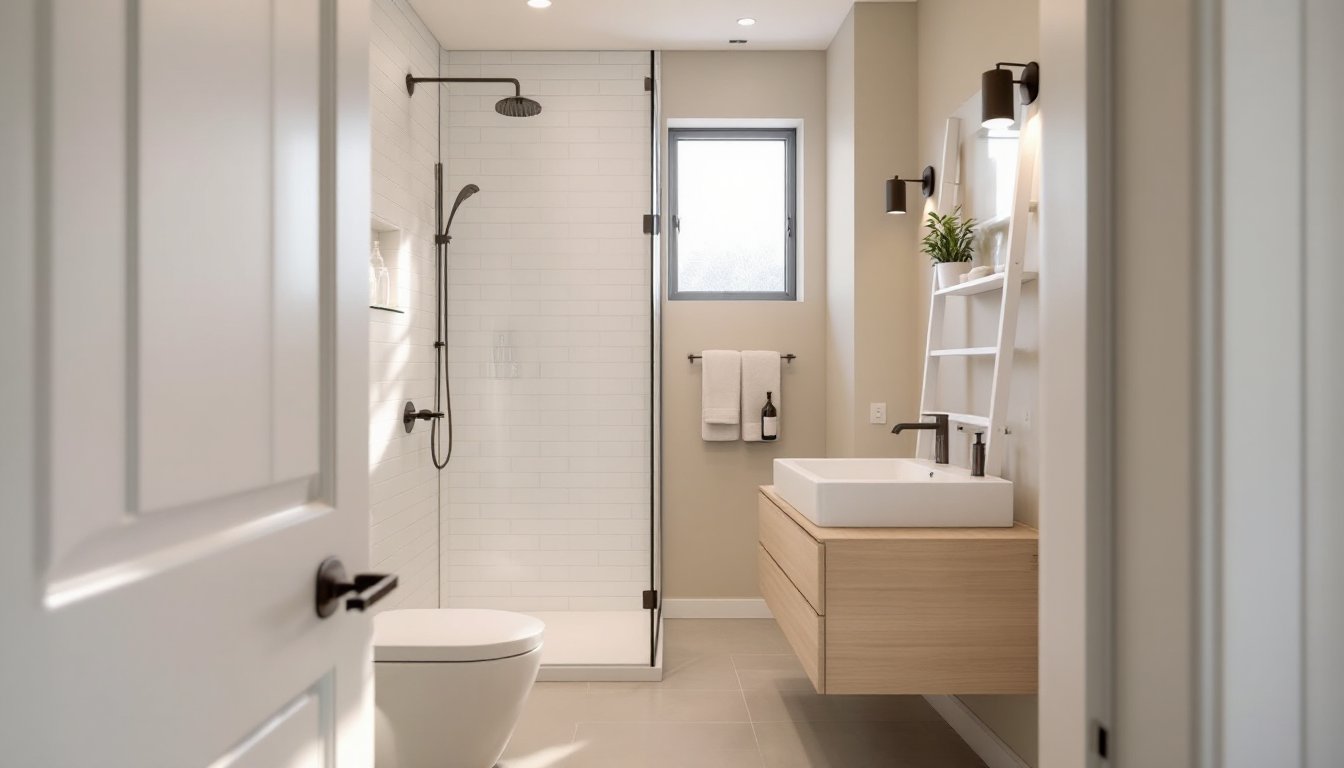
ToggleA small bathroom doesn’t have to feel cramped or compromise on function. With the right design moves, a 35- or 50-square-foot space can deliver comfort, storage, and even a touch of luxury. The key is working smarter, not necessarily gutting walls or moving plumbing. Thoughtful fixture choices, strategic color application, and clever storage can transform a tight powder room or half bath into a space that feels open and purposeful. This guide walks through layout tweaks, storage hacks, fixture upgrades, and budget-conscious ideas that make the most of every square inch.
Key Takeaways
- Smart layout changes like pocket doors, corner fixtures, and curbless showers maximize usable space in small bathrooms without requiring extensive plumbing work.
- Vertical storage solutions—floating vanities, recessed medicine cabinets, and over-toilet shelving—eliminate clutter while preserving valuable floor space.
- Light neutral colors, large-format tile, reflective surfaces, and layered lighting are the most cost-effective ways to make a small bathroom remodel feel open and spacious.
- Space-saving fixtures like compact toilets, corner vanities, and neo-angle shower pans are purpose-built for tight bathrooms and deliver modern performance.
- Budget-friendly updates such as paint, hardware swaps, peel-and-stick tile, and reglazing can refresh a small bathroom for under $500 in a weekend.
- Prioritize spending on high-touch fixtures like faucets, showerheads, and toilets that directly improve daily comfort and function in a small bathroom remodel.
Smart Layout Changes to Make Your Small Bathroom Feel Larger
Before ordering fixtures or picking paint, evaluate the existing layout. Even minor shifts can free up floor space and improve flow.
Move the door swing. A door that swings inward eats valuable square footage. If framing allows, rehang it to swing out into the hallway, or replace it with a pocket door. Pocket door hardware kits run about $150–$300 depending on quality, and installation requires opening the wall cavity to install the track, expect a half-day job if studs cooperate.
Corner sinks and toilets. Toilets and pedestal sinks designed for corner placement angle the fixture at 45 degrees, tucking plumbing into otherwise dead space. Corner toilets typically have a 10-inch or 12-inch rough-in: confirm your drain location before ordering. These fixtures can reclaim 6–10 inches of linear wall space, which matters in a 5×7-foot room.
Curbless or neo-angle showers. Replacing a tub with a walk-in shower often opens up the room visually and physically. A curbless shower with a linear drain eliminates the stepped threshold, making the floor plane continuous. Neo-angle units fit into corners and require less width than standard 32×32-inch square pans, some models fit into 36-inch corner alcoves. Check local code: many jurisdictions require 2% slope to drain and specific waterproofing membranes for curbless installs.
Relocate the vanity. If the vanity sits opposite the toilet and blocks circulation, consider a narrower wall. Measure carefully: building codes typically require 21 inches of clear space in front of the toilet (IRC R307.1), and similar clearance applies to most fixtures. Moving plumbing is expensive, budget $1,000–$2,500 for rerouting drain and supply lines, but sometimes a 12-inch shift makes a cramped layout workable.
Storage Solutions That Don’t Sacrifice Square Footage
Storage is often the first casualty in a small bathroom. Toiletries, towels, and cleaning supplies pile up fast, and traditional cabinetry consumes precious floor area.
Vertical Storage and Floating Vanities
Floating vanities mount to wall studs and leave the floor visible beneath, creating an illusion of more space. They also simplify cleaning. Most floating vanities use ½-inch or ¾-inch plywood backs and require blocking between studs or direct attachment to studs with heavy-duty brackets rated for 100+ pounds when loaded. Standard depths run 18–21 inches: narrow-depth models at 12–16 inches work in tight layouts and still accommodate an undermount sink.
Recessed medicine cabinets sit between studs (typically 14.5 inches wide for standard 16-inch on-center framing) and add storage without protruding into the room. Installation requires cutting drywall and possibly relocating electrical if a light fixture is in the way. If you hit a stud where you want the cabinet, you can remove it if it’s non-load-bearing, but consult a structural engineer or contractor first, never assume.
Over-toilet shelving and tall cabinets leverage vertical space. Ladder-style shelves or narrow linen towers (12–18 inches deep) fit above the toilet tank. Secure tall units to wall studs with L-brackets to prevent tipping, especially important if children are in the home.
Built-in niches in shower walls provide shampoo storage without aftermarket caddies. Frame them during the rough-in between studs, common sizes are 12×12 inches or 14×28 inches. Line with the same tile as the shower for a seamless look and waterproof with a foam backer board or membrane per manufacturer specs. The same principles apply whether you’re working in a bathroom or applying small space decorations throughout the house.
Color and Lighting Tricks to Open Up Your Space
Paint and light are the cheapest, and most effective, tools in a small bathroom remodel.
Light, neutral palettes. Whites, soft grays, and warm beiges reflect light and make walls recede. One gallon of quality bathroom paint (moisture-resistant, mildew-resistant formula) covers roughly 350–400 square feet and costs $30–$60. Go with a satin or semi-gloss sheen, it’s scrubbable and bounces more light than flat finishes.
Monochromatic schemes. Using one color family, say, varying shades of gray on walls, tile, and vanity, reduces visual clutter. Too many contrasting colors chop up a small room. If you want accent color, keep it to textiles (towels, rugs) that can be swapped seasonally.
Large-format tile. 12×24-inch or larger tiles create fewer grout lines, which makes floors and walls feel more expansive. Subway tile (3×6 inches) works too, but running it horizontally and keeping grout lines tight (⅛ inch) minimizes the grid effect. Designer galleries on Remodelista showcase multiple layout patterns worth considering.
Reflective surfaces. Glossy tile, glass shower enclosures, and large mirrors amplify light. A frameless mirror spanning the full width of the vanity (or even wall-to-wall) doubles perceived space. Frameless glass shower doors do the same, avoid frosted or patterned glass, which blocks sightlines.
Layered lighting. Small bathrooms need more than one overhead fixture. Combine a ceiling-mount LED (800–1,000 lumens minimum) with sconces flanking the mirror. Sconces at eye level (roughly 60–65 inches off the floor) eliminate shadows on faces, critical for grooming tasks. All bathroom lighting within 8 feet of a tub or shower must be rated for damp or wet locations per NEC 410.10. Use LED bulbs in the 3,000–4,000K range (warm to neutral white) for accurate color rendering without the harsh blue cast.
Fixture Upgrades for Compact Bathrooms
Swapping outdated fixtures is often the single highest-impact change in a small bathroom remodel. Modern options are engineered for tight spaces without sacrificing performance.
Space-Saving Showers, Tubs, and Toilets
Compact toilets. Standard toilets have a 28–30-inch depth (from wall to front of bowl). Compact or “round-front” models measure as short as 25–27 inches, saving 3–4 inches, enough to improve clearance in narrow rooms. Wall-hung toilets eliminate the floor-mounted base entirely and allow the bowl height to be set during install, typically 15–19 inches to the rim. The tank hides in the wall (requires a 2×6 stud wall or furring), and the carrier frame mounts to studs or blocking rated for 500+ pounds. These systems cost more ($400–$800 for the fixture and carrier) but clean floors easily and look sleek.
Corner or compact vanities. Vanities as narrow as 18 inches wide are available, and corner models use 90-degree wall junctions. Ensure the sink leaves enough counter “landing space”, at least a couple of inches on one side for a soap dispenser or toothbrush.
Shower stalls and bases. Standard shower bases start at 32×32 inches, but 30×30-inch and 32×30-inch neo-angle or rectangular pans exist for tighter alcoves. Prefab acrylic or fiberglass units install faster than custom tile jobs and cost less ($200–$600 vs. $1,500+ for tile with waterproofing). If going custom, use a mortar bed or foam pan and a bonded waterproof membrane (Schluter, RedGard, or equivalent). Tile directly over unapproved substrates and you’ll have leaks within a year.
Tub options. If a tub is non-negotiable, Japanese soaking tubs are deeper and shorter than standard 60-inch alcove tubs, offering a full soak in as little as 48 inches of length. These require stronger floor joists due to water weight, calculate at least 40–50 pounds per square foot when full, and check that your floor framing can handle it. Most first-floor installs are fine: second-floor may need reinforcement.
Handheld showerheads and thermostatic valves. A handheld wand on a slide bar adds function without taking space, and a thermostatic mixing valve prevents scalding, a code requirement in many jurisdictions (max 120°F at the fixture per IRC P2708.3). Pressure-balance valves are the budget alternative and still meet code. Browse ideas and fixture galleries at Homify to see how different combinations work in real installs.
Budget-Friendly Design Ideas for Small Bathroom Makeovers
Not every remodel requires tearing out tile or moving drains. Plenty of impactful updates cost under $500 and take a weekend.
Paint and new hardware. Repainting walls and the vanity (if wood) refreshes the space for the cost of a couple gallons and a Saturday. Swap dated cabinet pulls, towel bars, and toilet paper holders for modern brushed nickel, matte black, or brass options, hardware runs $3–$15 per piece at home centers.
Peel-and-stick or luxury vinyl tile. If existing tile is ugly but sound, adhesive vinyl planks or peel-and-stick tiles install right over it (as long as the surface is clean, dry, and level). Quality LVT costs $2–$5 per square foot and is waterproof, look for products with a wear layer of at least 12 mil for durability. This approach is common in small RV decorating projects where removing old flooring isn’t practical.
Reglazing vs. replacing. Tub and tile reglazing (also called refinishing) costs $300–$600 and can make a yellowed tub look new. The finish lasts 5–10 years with proper care. Compare that to $1,200–$3,000 for tub removal, disposal, and new install. Reglazing is a cosmetic fix, if the tub is cracked or the subfloor is rotted, replacement is the only safe option.
Open shelving instead of cabinets. Floating wood or metal shelves cost $20–$80 per shelf installed and show off attractive towels and baskets. They won’t hide clutter like closed cabinetry, but in a small room, the airiness can be worth it. Use ¾-inch solid wood or plywood and bracket supports rated for the load.
DIY backsplash and accent walls. A single accent wall in mosaic tile, beadboard, or board-and-batten paneling adds character without the cost of a full-room tile job. Mosaic sheets ($8–$15 per square foot) install faster than individual tiles, and beadboard panels run about $1 per square foot for MDF versions (prime and paint them for moisture resistance).
Faucet and lighting upgrades. Swapping a builder-grade faucet for a mid-range model ($80–$200) and adding a dimmer switch or updated light fixture ($30–$150) are both DIY-friendly. Faucets install with basic wrenches: light fixtures require turning off the breaker and following NEC-compliant wire connections (ground, neutral, hot). If you’re uncomfortable with electrical, hire a licensed electrician, bathroom moisture and electricity don’t mix. Similar budget-smart thinking applies when tackling other confined areas, like applying small patio decorating strategies outdoors.
Focus spending on what you touch daily. In a tight budget, prioritize the vanity faucet, showerhead, and toilet, these see the most use. Tile and paint are visible but don’t affect daily comfort as much. A $150 thermostatic shower valve beats a $300 statement mirror in terms of quality-of-life improvement.
Safety and PPE. Any demolition or tile work requires safety glasses, dust masks (N95 or better), and gloves. Cutting tile generates silica dust, use a wet saw outdoors or ensure excellent ventilation and respiratory protection. Epoxy grouts and some adhesives off-gas: open windows and use a fan. If you’re dealing with pre-1978 construction, test for lead paint before sanding or scraping.


