
Table of Contents
ToggleA deck landing isn’t just a place to pause between the yard and the door, it’s an opportunity to define how your outdoor space flows, functions, and feels. Whether it’s a transition between levels, a welcoming platform at the main entry, or a cozy alcove tucked into a corner, the right landing design can add dimension, visual interest, and usable square footage to your deck. Homeowners planning a new build or tackling a deck refresh have more creative latitude than ever, especially with the range of composite and natural materials now available. This guide walks through practical, proven deck landing concepts that balance aesthetics with structural integrity, helping DIYers and contractors alike think beyond the basic rectangle.
Key Takeaways
- Deck landing ideas extend beyond code compliance—they create functional transitions, visual interest, and distinct outdoor zones that enhance how people move through and experience deck spaces.
- Multi-level landings, corner retreats, and grand entrance platforms each serve different purposes; choose a design that matches your lot slope, entry points, and desired use of outdoor space.
- Structurally, proper joist sizing (typically 2×8 or 2×10 on 16-inch centers), ledger attachment with ½-inch lag screws, and load-bearing posts are essential for safety and longevity.
- Mixing materials—composite with cedar, hardwoods with stone, or varied decking colors between levels—reinforces visual separation and adds dimension without requiring additional railings.
- Built-in features like benches, planters, and storage cubbies transform a landing into a multifunctional space that maximizes square footage and eliminates the need to source coordinating furniture.
- Always verify local building codes and obtain permits before construction, especially if the landing attaches to the house ledger or supports overhead structures like roofs or pergolas.
What Is a Deck Landing and Why Does It Matter?
A deck landing is a flat, stable platform that serves as a transition point, often between different deck levels, stair runs, or between the deck and the ground. Building codes typically require a landing when a stairway exceeds a certain number of risers (often 12 feet of vertical rise under the IRC), but landings also serve functional and aesthetic roles beyond code compliance.
From a design perspective, landings break up long sight lines, create natural gathering zones, and offer opportunities to shift materials, railings, or built-in features. Structurally, they distribute loads and provide secure footing at direction changes. On sloped lots, multi-level landings can step down a hillside gracefully without requiring a single long staircase.
Before planning a landing, confirm local code requirements with your building department. Load-bearing posts, joist spacing, and fastener specs all matter, especially if the landing connects to the house ledger or supports a roof or pergola above. If your project involves structural modifications or attaches to the home’s foundation, a permit is likely required.
Multi-Level Deck Landings for Added Dimension
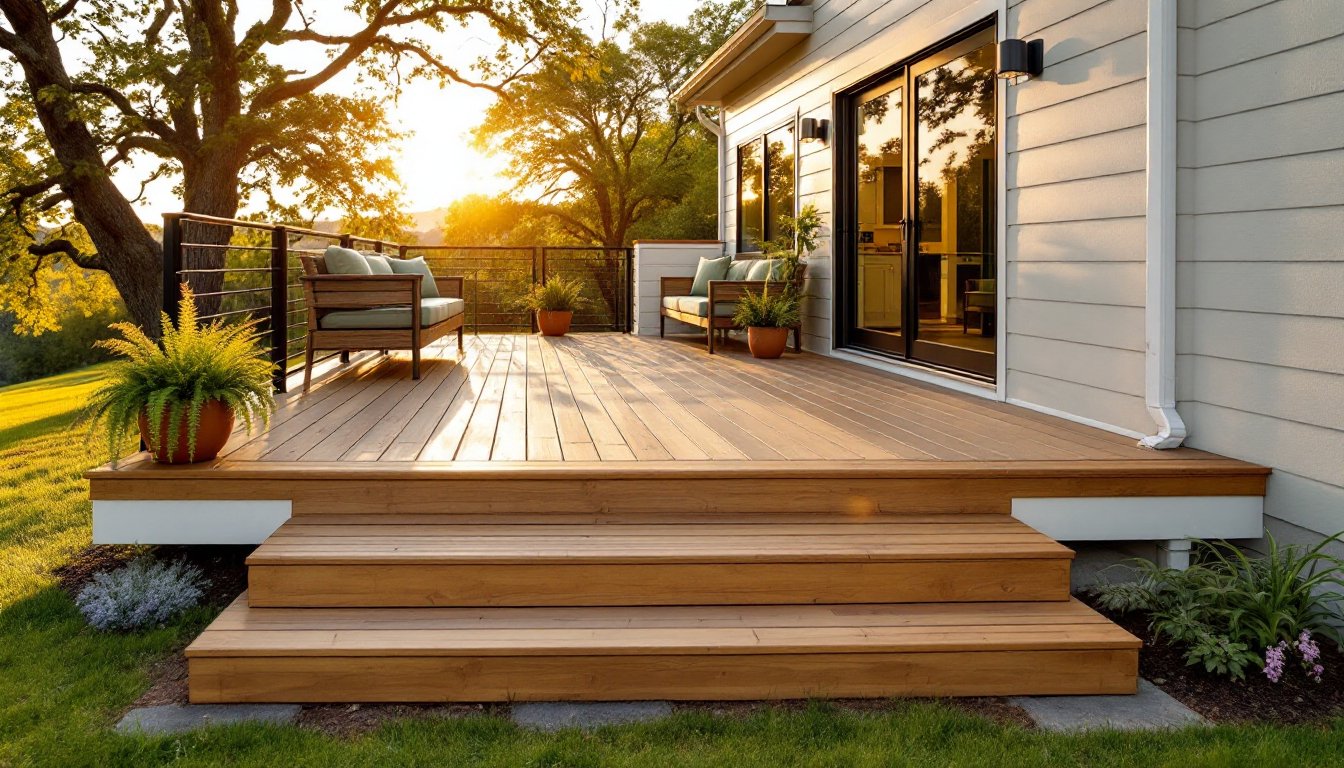
Multi-level decks use landings to create distinct zones without walls or railings cluttering the sightlines. A common approach: drop the main deck by 6 to 12 inches to define a dining area, lounge space, or firepit zone. The step down acts as both a visual cue and a subtle boundary.
Framing considerations: Each level requires its own ledger attachment or freestanding post-and-beam support. Joist direction can alternate between levels to add visual texture, run decking boards perpendicular to joists, so a directional change in boards signals the elevation shift. Use 2×8 or 2×10 joists on 16-inch centers for residential deck loads: consult span tables if you’re working with composite or exotic hardwoods, as these can have different load ratings than pressure-treated lumber.
Materials tip: Mixing decking colors or plank widths between levels reinforces the separation. For example, a primary deck in gray composite with a lower landing in natural cedar creates contrast without requiring railings. Just ensure all decking materials share similar expansion/contraction rates to avoid seasonal gaps or buckling.
Sloped lots benefit especially from cascading landings. Instead of a single steep staircase, three or four shallow platforms can follow the grade, each offering a pause point and reducing the overall sense of climbing. These designs often integrate planting beds or retainer walls to anchor the structure into the landscape.
Cozy Corner Landing Retreats
Not every landing needs to be in the traffic path. A corner landing, especially one tucked into an L-shaped deck layout, creates a semi-private nook ideal for a bench, potted plants, or a small bistro set. These work well when the main deck is large and lacks definition: the corner landing becomes a destination rather than a pass-through.
Layout strategy: Frame a 6×6-foot or 8×8-foot platform in the corner, either at grade or raised 4 to 6 inches above the main surface. If raised, the perimeter can double as bench seating (top the frame with 2×6 or 2×8 cap boards). If at grade, use a contrasting decking pattern, herringbone, picture frame, or diagonal, to delineate the space visually.
Privacy options: Add a trellis, slatted screen, or vertical planter along one or two sides to create enclosure without blocking airflow. Pressure-treated 2x2s or cedar 1x4s work well for DIY screens: space slats 2 to 4 inches apart for a balance of privacy and light. Secure screens to deck posts or freestanding 4×4 posts sunk into concrete footings.
Corner landings also offer a smart spot to incorporate electrical outlets or low-voltage lighting. Run conduit during framing, and install weatherproof boxes before decking goes down. If the project involves any permanent wiring, verify local codes and consider hiring a licensed electrician, many jurisdictions require permits for any outdoor electrical work beyond low-voltage landscape lighting.
Grand Entrance Deck Landings
An entry landing sets the tone for the entire deck. Positioned at the top of the main staircase or directly outside a back door, it’s the first, and last, impression. Design this space to be generous: at minimum, 4 feet deep and as wide as the doorway it serves, but 6 to 8 feet in both dimensions feels more welcoming and allows two people to pass comfortably.
Structural notes: Entry landings often cantilever slightly beyond the house, supported by a ledger board lagged into the rim joist and by corner posts with diagonal bracing. Use ½-inch lag screws or through-bolts at 16 inches on-center into solid framing, not just sheathing. If the landing supports a roof or covered porch, consult an engineer or experienced framer, additional posts and beams will be needed to carry vertical loads.
Aesthetic upgrades: Widen the landing to accommodate planters flanking the door, or add a built-in bench along one side. Upgrade the decking pattern with a bordered inlay or center medallion using contrasting wood species. Ipe, cumaru, or Trex Transcend in a darker shade can frame a lighter field, creating a rug-like effect.
For homes with multiple entry points, consider matching landing materials and railing styles across all entries to unify the exterior. Consistency in baluster spacing, post caps, and fascia boards signals intentional design rather than piecemeal additions.
Integrated Seating and Built-In Features
A landing becomes multifunctional when seating, storage, or planters are built directly into its structure. This approach maximizes usable space and eliminates the need to hunt for furniture that fits.
Built-in benches: Frame benches at 18 inches high and 16 to 18 inches deep for comfortable seating. Use doubled 2×6 joists or blocking to support the seat surface, and top with 2×4 or 2×6 decking perpendicular to the front edge. Add a backrest at 16 to 18 inches above the seat using vertical 2x4s and a horizontal 2×6 cap rail. Secure all joints with exterior-grade screws or structural fasteners: benches see more racking force than decking.
Planter boxes: Build boxes from 2×10 or 2×12 boards, lined with landscape fabric and fitted with drainage holes in the bottom. Elevate planters on blocking to allow airflow and prevent rot. If using pressure-treated lumber for planters, note that newer formulations (alkaline copper quat) are rated for ground contact but can still leach copper, use a plastic liner if growing edibles.
Storage cubbies: Hinge a section of bench seating to create hidden storage for cushions, garden tools, or firewood. Use stainless steel or brass butt hinges rated for outdoor use, and add a soft-close lid support to prevent finger pinches. Ventilate storage compartments with ¼-inch gaps or drilled holes to prevent moisture buildup.
Many DIYers find inspiration in free furniture plans and adapt them for outdoor use by swapping materials to pressure-treated or cedar lumber and using exterior-grade fasteners and finishes.
Material and Design Combinations for Stunning Landings
Mixing materials, wood, composite, metal, stone, adds texture and signals transitions between spaces. A composite main deck with a cedar landing, for example, creates warmth at an entry without committing the entire project to maintenance-heavy wood.
Composite decking (Trex, TimberTech, Azek) offers low maintenance and consistent color, but it expands and contracts more than wood, leave ¼-inch gaps between boards and account for thermal movement, especially in dark colors. Most composites require solid blocking or metal brackets at board ends: follow manufacturer specs or risk sagging. Coverage per square foot varies by board width: 5.5-inch-wide boards cover roughly 0.46 square feet per linear foot.
Pressure-treated southern yellow pine remains the most cost-effective framing and decking option. Nominal 2×6 boards (actual 1.5 x 5.5 inches) work for most residential decks: use 2×8 or 2×10 joists for spans over 8 feet. Let treated lumber dry for a few weeks before applying stain or sealer, wet wood won’t absorb finish properly.
Hardwoods (ipe, cumaru, tigerwood) deliver rich color and decades of durability, but they require carbide-tipped blades, pre-drilling for every fastener, and hidden fastener systems to avoid surface splits. Expect to pay $8 to $15 per linear foot for decking, versus $2 to $4 for treated pine.
Stone or pavers can cap a landing at grade level, especially where the deck meets a patio or walkway. Pour a 4-inch compacted gravel base topped with 1 inch of sand, then lay pavers in a running bond or herringbone pattern. Edge restraints prevent creep over time.
For projects involving complex joinery or finish work, techniques covered in resources like Fine Homebuilding can elevate the result from functional to showcase-quality.
Conclusion
Deck landings do more than meet code, they shape how people move through and experience outdoor space. By varying levels, integrating seating, or mixing materials, homeowners can transform a simple platform into a focal point that adds both function and character. Whether building new or renovating, take the time to plan framing, choose durable materials, and check local codes. The result will be a landing that feels intentional, built to last, and ready for years of use.


