
Table of Contents
ToggleA bedroom should be more than a place to crash after a long day. It’s your personal retreat, and getting the decor right makes all the difference between a room that energizes you and one that just feels…fine. The good news? You don’t need a contractor or a massive budget to transform your space. With some strategic planning and a few weekend projects, anyone can create a bedroom that looks pulled together and feels like home.
Key Takeaways
- A cohesive color palette using the 60-30-10 rule—60% dominant neutral, 30% secondary color, and 10% accent—creates a balanced, modern bedroom look without the cluttered appearance.
- Layering textures through bedding, rugs, curtains, and wood and metal accents adds visual depth and warmth that makes decor ideas for bedroom feel lived-in rather than sterile.
- Strategic wall treatments like board-and-batten wainscoting, peel-and-stick wallpaper, or oversized art behind the headboard elevate a room beyond basic paint.
- A standout headboard—whether DIY upholstered, reclaimed wood, or rattan—anchors the bedroom visually and serves as the design foundation for the entire space.
- Layered lighting with ambient overhead fixtures, task lighting for reading, and accent lighting creates mood and functionality that a single overhead light cannot achieve.
- Quality accessories grouped in odd numbers and plants like pothos or snake plants add personality while maintaining restraint, preventing visual clutter in the bedroom.
Start with a Cohesive Color Palette
Before buying a single throw pillow, nail down your color scheme. A cohesive palette ties everything together and prevents that “I bought everything on sale” look.
Pick a base neutral (white, gray, beige, or even charcoal) for walls and large furniture pieces. This gives you flexibility to swap accent colors down the road without repainting. If you’re working with existing furniture, let that dictate your neutrals.
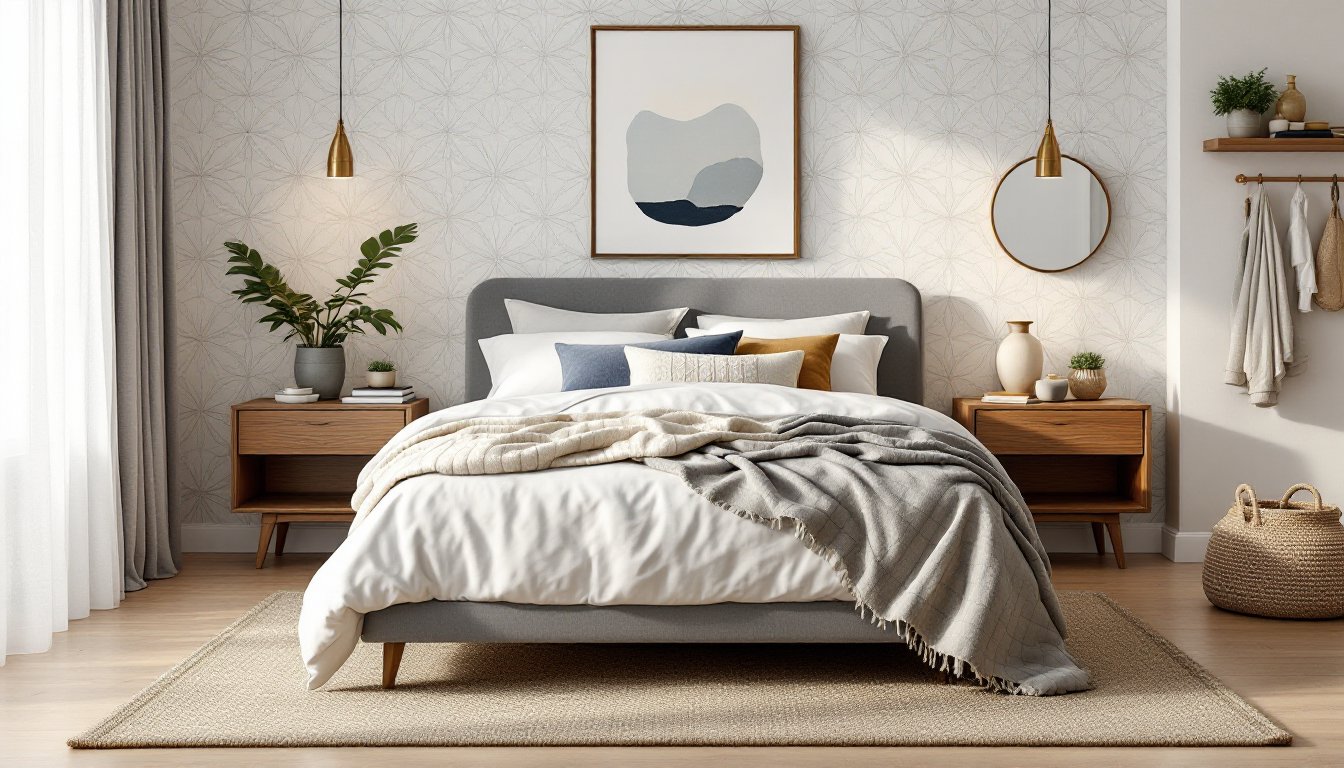
Add 2-3 accent colors through bedding, curtains, rugs, and accessories. The 60-30-10 rule works well here: 60% dominant color (your neutral), 30% secondary color, and 10% accent. For example, soft gray walls, navy bedding, and brass or mustard accents create a balanced, modern look.
Test paint samples on at least two walls, north-facing rooms read cooler, south-facing warmer. Benjamin Moore and Sherwin-Williams both offer peel-and-stick samples that beat those tiny paint chips. Light changes everything, so live with samples for a few days before committing.
Consider undertones. Beiges can lean pink, yellow, or gray. Grays can read blue, green, or purple depending on lighting. Bring home samples of fabrics and hold them against your paint samples in natural and artificial light.
Layer Textures for Depth and Warmth
Flat, one-note surfaces make a room feel like a showroom. Layering different textures adds visual interest and makes the space feel lived-in without clutter.
Start with the bed. Mix smooth cotton or linen sheets with a chunky knit throw and velvet or faux fur pillows. The contrast between sleek and tactile creates depth. Skip the matching bed-in-a-bag sets, they’re convenient but read as generic.
Add an area rug even if you have carpet. A jute, wool, or high-pile rug under the bed adds warmth underfoot and defines the sleeping zone. In smaller rooms, designing with layered textures creates coziness without visual clutter. For hardwood or laminate, use a rug pad to prevent slipping.
Window treatments matter more than people think. Heavy linen or blackout curtains in a complementary texture soften hard lines and improve sleep quality by blocking early morning light. Mount curtain rods 4-6 inches above the window frame and extend them 3-4 inches beyond each side to make windows appear larger.
Throw in wood, metal, and natural fiber accents. A wooden nightstand, metal lamp base, and woven basket for storage hit different textural notes. Avoid all-wood or all-metal: variety keeps things interesting.
Elevate Your Walls Beyond Paint
Blank walls scream “just moved in,” but going overboard with gallery walls can feel chaotic. Find the middle ground with intentional wall treatments.
Accent walls still work when done right. Forget the outdated “paint one wall dark” rule. Instead, try board-and-batten wainscoting, shiplap, or peel-and-stick wallpaper on the wall behind the bed. Install 1×4 or 1×6 pine boards vertically or horizontally for board-and-batten, spacing them 12-16 inches apart. Fill nail holes, caulk seams, and prime before painting for a clean finish.
Wallpaper has come a long way. Peel-and-stick options from Tempaper or Spoonflower let renters and commitment-phobes test bold patterns without the permanence. Grasscloth, geometric prints, or subtle textures add dimension. Start with one wall, usually behind the headboard, rather than wrapping the whole room.
Mirrors aren’t just functional. A large leaner mirror (at least 60 inches tall) propped against a wall reflects light and makes the room feel bigger. For hanging mirrors over 50 pounds, use wall anchors rated for the weight or hit a stud. According to design experts, mirrors strategically placed opposite windows maximize natural light.
Art and photography should reflect your personality, not just fill space. Oversized prints (think 24×36 inches or larger) make a statement without the fussy arrangement of a gallery wall. Frame personal photos in matching frames for a cohesive look.
Create a Focal Point with Your Headboard
The headboard anchors the room visually. If your bed sits against a wall with nothing behind it, the space feels unfinished.
DIY upholstered headboards are easier than they look. Cut a piece of ¾-inch plywood to your desired size (twin: 41 inches wide, full: 56 inches, queen: 62 inches, king: 80 inches). Add 2-inch foam padding cut to size, wrap with batting, then your fabric of choice. Staple everything to the back using a heavy-duty staple gun, pulling fabric taut as you go. Mount to the wall using French cleats or Z-clips rated for the weight.
For a no-build option, try a large tapestry, quilt, or even a salvaged door mounted horizontally. Secure anything over 20 pounds into studs using appropriate hardware. Many complete bedroom transformations start with a standout headboard as the design anchor.
Floating shelves above the bed work if you’re not in an earthquake zone and you secure them properly. Use ½-inch or thicker shelves and bracket them into studs. Keep items lightweight and avoid placing anything directly over where you sleep, no one wants to wake up to a falling picture frame.
Rattan, reclaimed wood, or velvet-upholstered headboards each set a different tone. Rattan reads casual and beachy, reclaimed wood feels rustic or industrial, and velvet leans glam. Pick based on your overall style direction.
Use Lighting to Set the Mood
Overhead lighting alone kills ambiance. Bedrooms need layered lighting: ambient, task, and accent.
Ambient lighting is your overhead fixture or ceiling fan. If you’re stuck with a builder-grade boob light, swap it. Most ceiling fixtures attach with a basic mounting bracket and wire nuts, shut off the breaker, disconnect the old fixture, and install the new one following manufacturer instructions. If you’re uncomfortable working with electrical, hire a licensed electrician. Violating NEC code can void insurance.
Task lighting includes bedside lamps or wall-mounted sconces for reading. Swing-arm sconces save nightstand space and provide adjustable light. Mount them 50-60 inches from the floor (roughly eye level when sitting up in bed). Hardwired sconces require cutting into drywall and running wire, again, that’s electrician territory unless you’re confident with electrical work and local codes.
For renters or quick upgrades, plug-in sconces with cord covers work well. Use adhesive cord channels to hide wires along baseboards and up walls. Current interior design trends emphasize warm-toned LED bulbs (2700K-3000K) for bedrooms rather than harsh cool whites.
Accent lighting adds drama. LED strip lights behind the headboard or under floating nightstands create a subtle glow. Battery-operated picture lights highlight artwork. Dimmer switches let you adjust brightness for different times of day, install them on ambient and task lights if possible.
Add Personality with Accessories and Greenery
Accessories are where your personality shows up, but restraint is key. Too many tchotchkes create visual noise.
Group items in odd numbers (3 or 5) on dressers and nightstands. A small stack of books, a candle, and a small plant works better than a dozen scattered items. Use trays to corral smaller objects and create intentional vignettes.
Greenery brings life to the space. If you forget to water plants, try pothos, snake plants, or ZZ plants, all tolerate neglect and low light. For actual low-light bedrooms (north-facing or heavily shaded), snake plants and pothos are your best bet. Keep plants in pots with drainage holes and use saucers to protect furniture.
Quality over quantity applies to throw pillows. Two Euro shams (26×26 inches) plus two standard pillows create a clean, hotel-style look without the pillow avalanche. If you want more, add one lumbar pillow or a single accent pillow in a bold pattern.
Decorative storage hides clutter while adding style. Woven baskets under nightstands, a storage bench at the foot of the bed, or floating shelves with bins keep the room functional. Just like compact areas benefit from smart storage solutions, bedrooms need designated spots for everyday items to prevent countertop creep.
Personal touches, travel souvenirs, heirlooms, or collections, make the space yours. Frame concert tickets, display a vintage camera, or hang that painting you picked up at a flea market. Just keep the “airport lounge” decor, generic prints and mass-produced signs, to a minimum.
Conclusion
Transforming a bedroom isn’t about following a rigid formula or buying everything new at once. Start with a solid color palette, layer in textures, and add elements that reflect who you are. Most of these projects take a weekend or less, and the materials won’t expensive. Focus on getting the big pieces right, paint, lighting, and that headboard, then build from there. Your bedroom should work for you, not against you.


